
Exclusive · In Conversation · Screen
The other side of fear
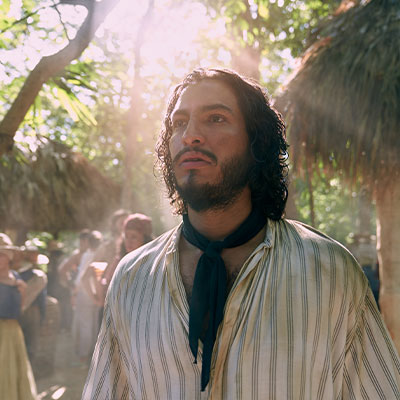
Untrained, uninvited and cast anyway. Jack Brett Anderson on the rooms he talked his way into, and the discipline of staying in them.
Beginnings
You have spoken before about not being classically trained. What did that actually mean, day to day, in rooms with people who had the vocabulary when you didn’t?
I didn’t get the intense introduction to the industry — the classes, the training you’d get from drama school. I didn’t get that chance, or even see it as a real possibility. We didn’t have money growing up, so it was a myth to me.
I went in blind but fearless, because I didn’t really have another way. I learned as I went along. I loved it so much and wanted to be doing it, and I knew I had catching up to do — picking things up quickly was necessary at that stage. Then you apply it as best you can and keep your place in the room, or you carry on and turn up to the next one.
Is there a specific moment, before any of the work, when acting stopped being a possibility and became the plan?
When I got my first yes. The first yes is exhilarating, and I thought: someone else really sees what I see. A few commercials gave me the feeling I could be in this world. Then the review came in for Edward II in 2011, and it was about my ability — about making them feel what they’d written.
I was untrained, but I’d been cast in a classical play, in a historic theatre, and got a stand-out review. Any nineteen-year-old would be ecstatic. It could have gone so differently. But it was a nudge, a keep-going sort of thing, and I couldn’t let it mean anything yet. I stood on it. We have to stand on our achievements to remain strong and reach the next step. The certainty came with Wolfblood — I was trusted to lead a show for two seasons, and I knew then that I could keep making that happen.
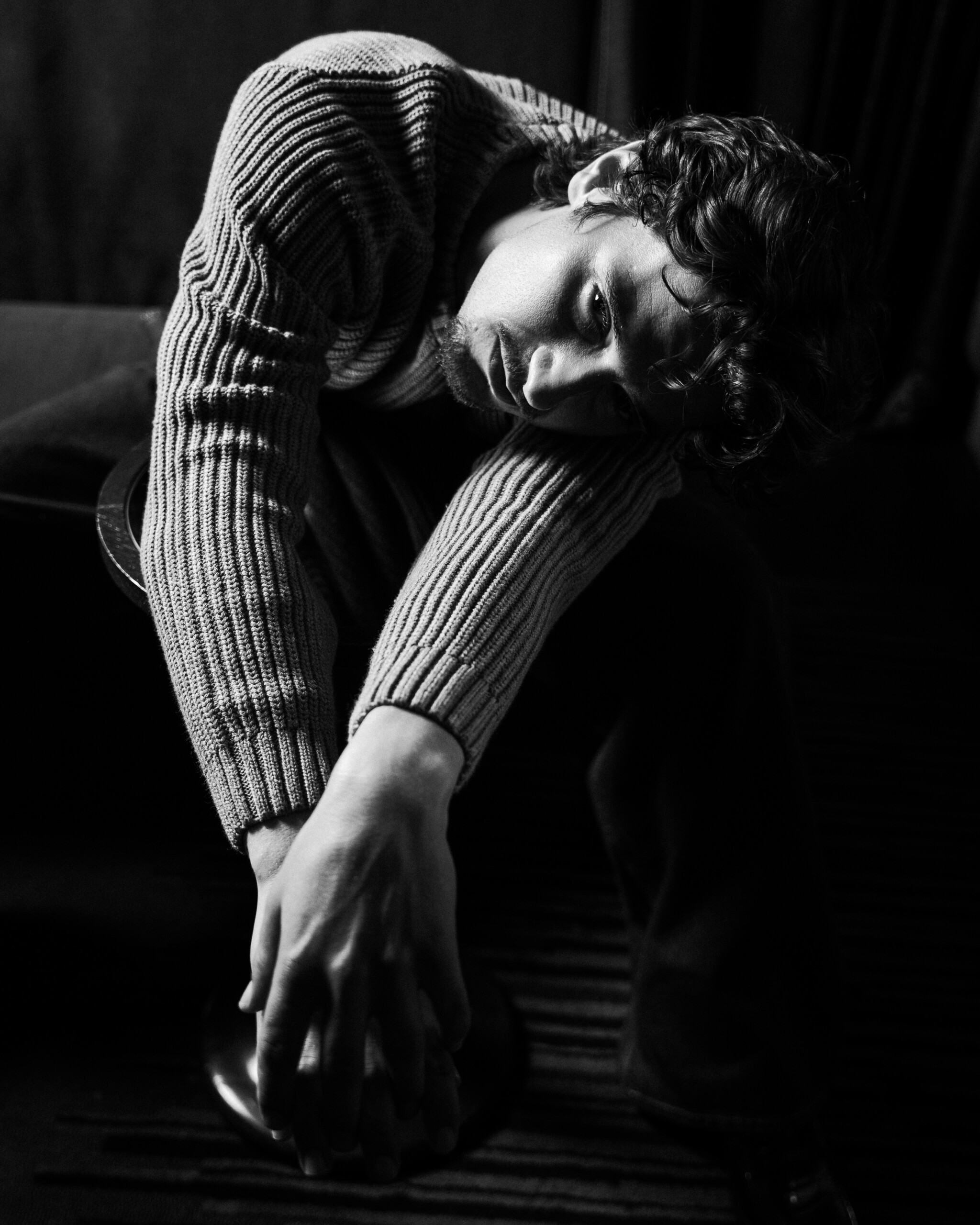
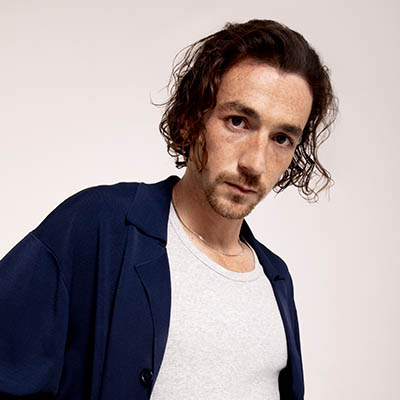
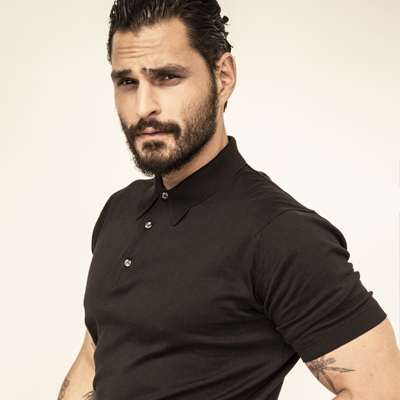
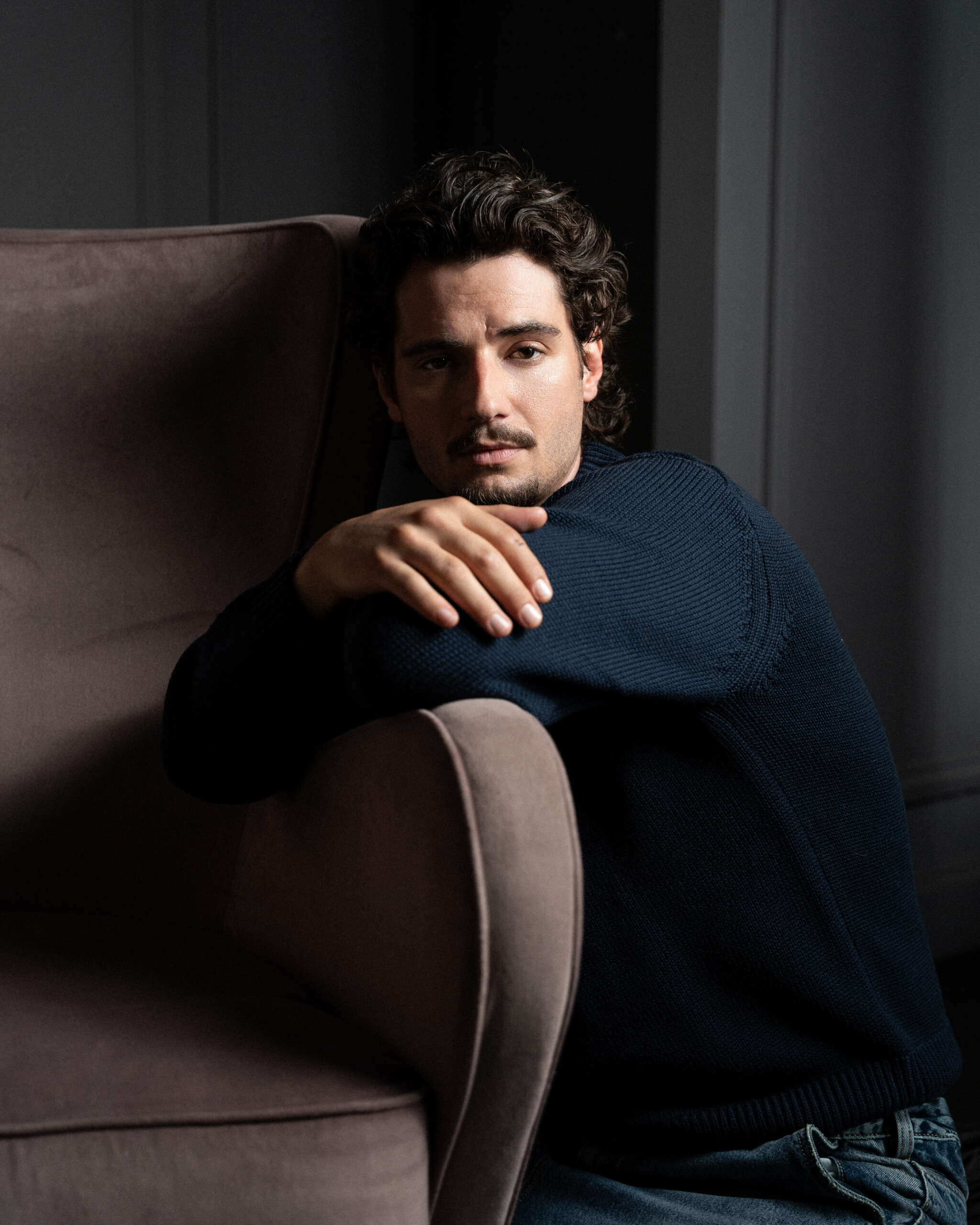
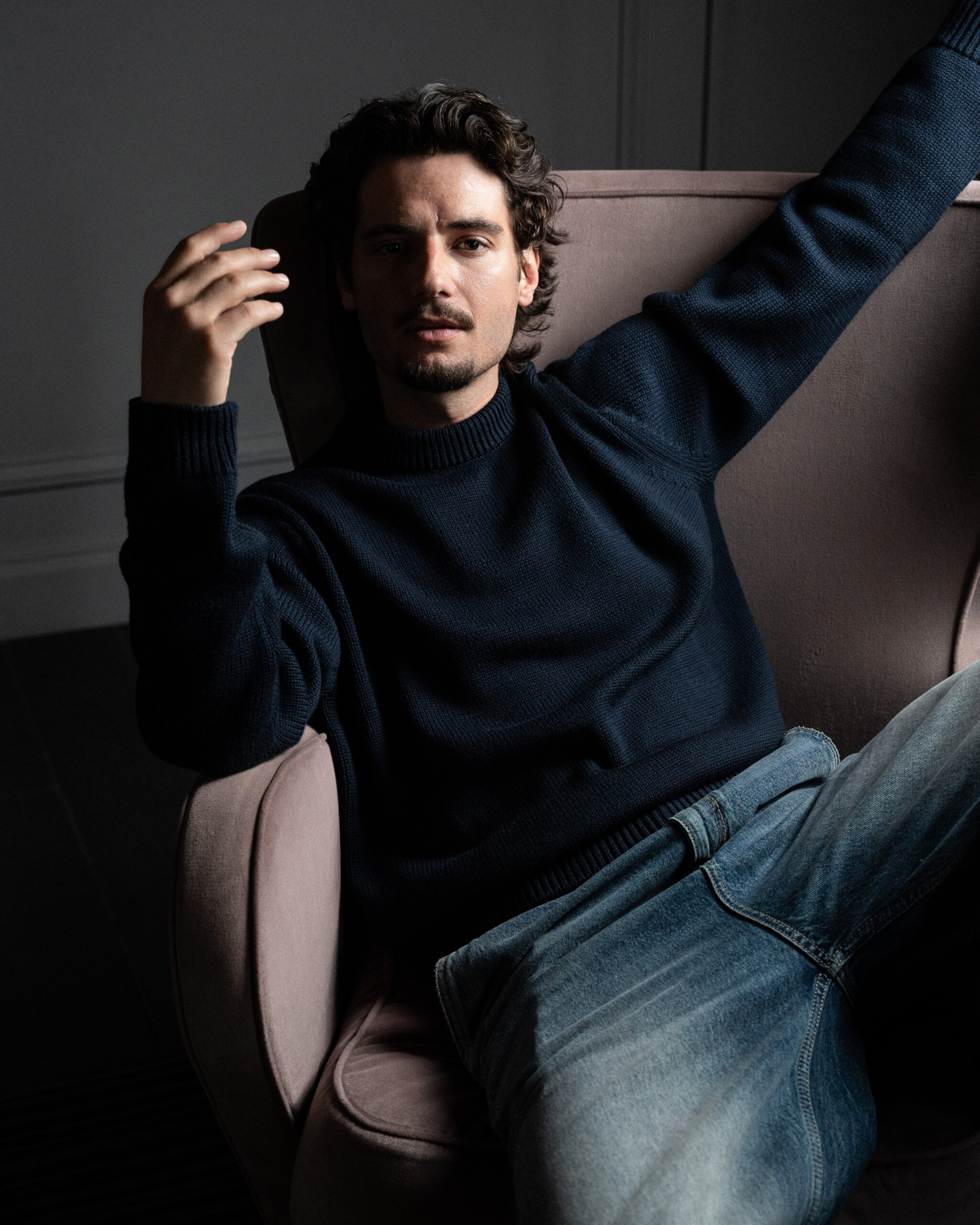
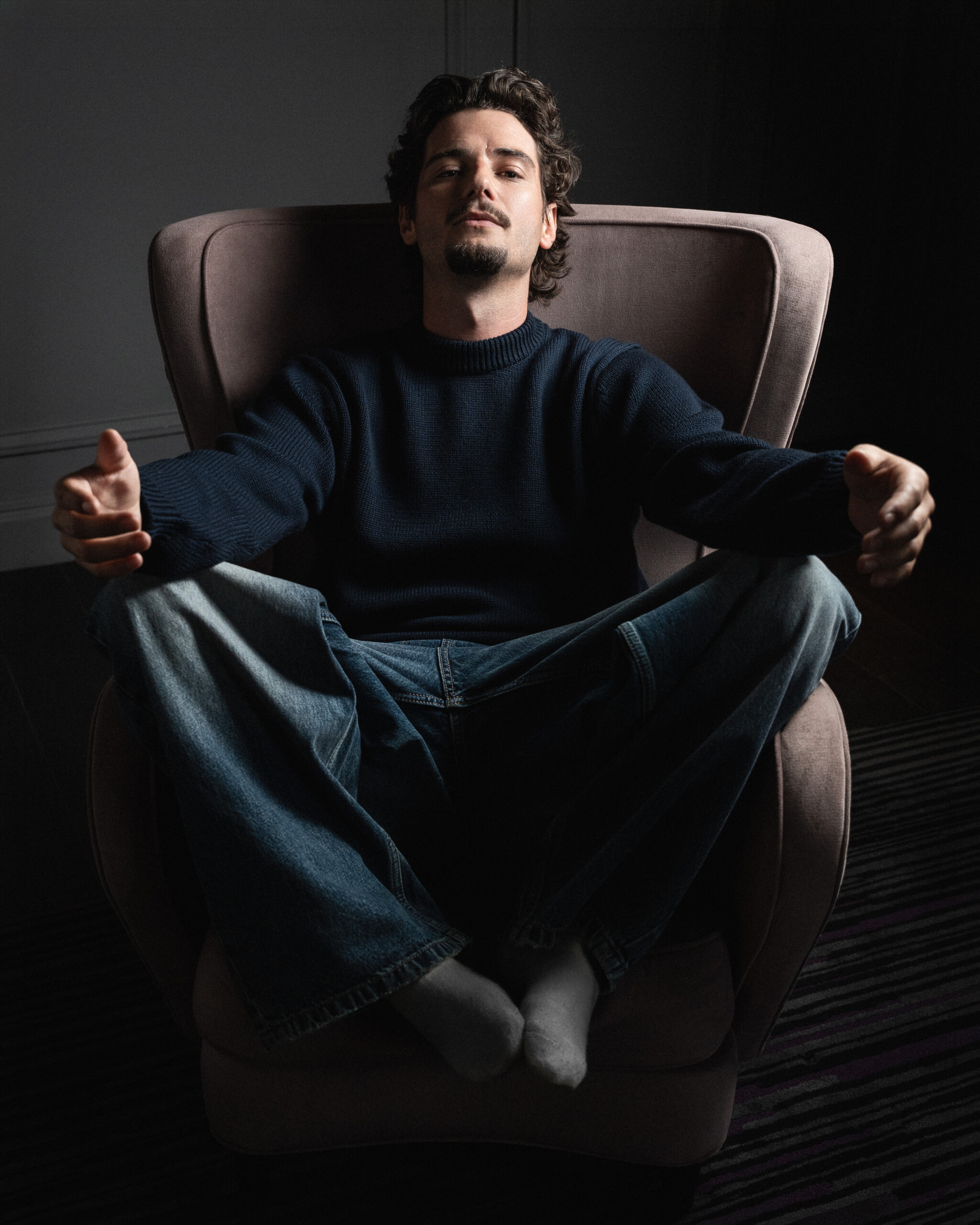
Look 01 — Jumper, Ronning. Jeans, Pull & Bear. Shoes, Vario.
The Stage
Edward II at the Rose is where the notices started. Setting aside what you have been told about it since, what do you actually remember of those nights?
It feels like a dream now, looking back. Treading the boards in the oldest theatre in London, playing a king — it felt epic to me then. It was all so new. The smell of the theatre. Everyone getting ready in their own corner of backstage. And then that moment when it’s getting close and you get the gut feeling: it’s show time. Don’t mess it up.
A lot of your stage work sits in confined, punishing worlds. Do you have a way of putting a character down at the end of a run, or does it wear off in its own time?
Sometimes I can leave it behind as soon as I leave set. But with plays that are heavy, it’s a lived experience — beginning to end, over and over. It takes longer to shake off. Muscle memory stays active. It took me a while to shake Lukas in A Night Like This. The accent, mostly.
It can be cathartic too, exploring those punishing worlds. I’ve learned to compartmentalise more.
Directing Syndrome put you on the other side of the audition table for the first time. What did you see from that chair that you wish every actor could see once?
Sitting there looking at each actor, I just wanted them to smash it. To draw me in as though I were watching it at home on the screen — the same way they’d want to be captured by an actor getting lost in it.
Look at the people in that room as your colleagues, and you’ve come in to lay a scene down. They’re always going to be there, so see them that way, before and long after. Be prepared to lay it down as if it were a shooting day.
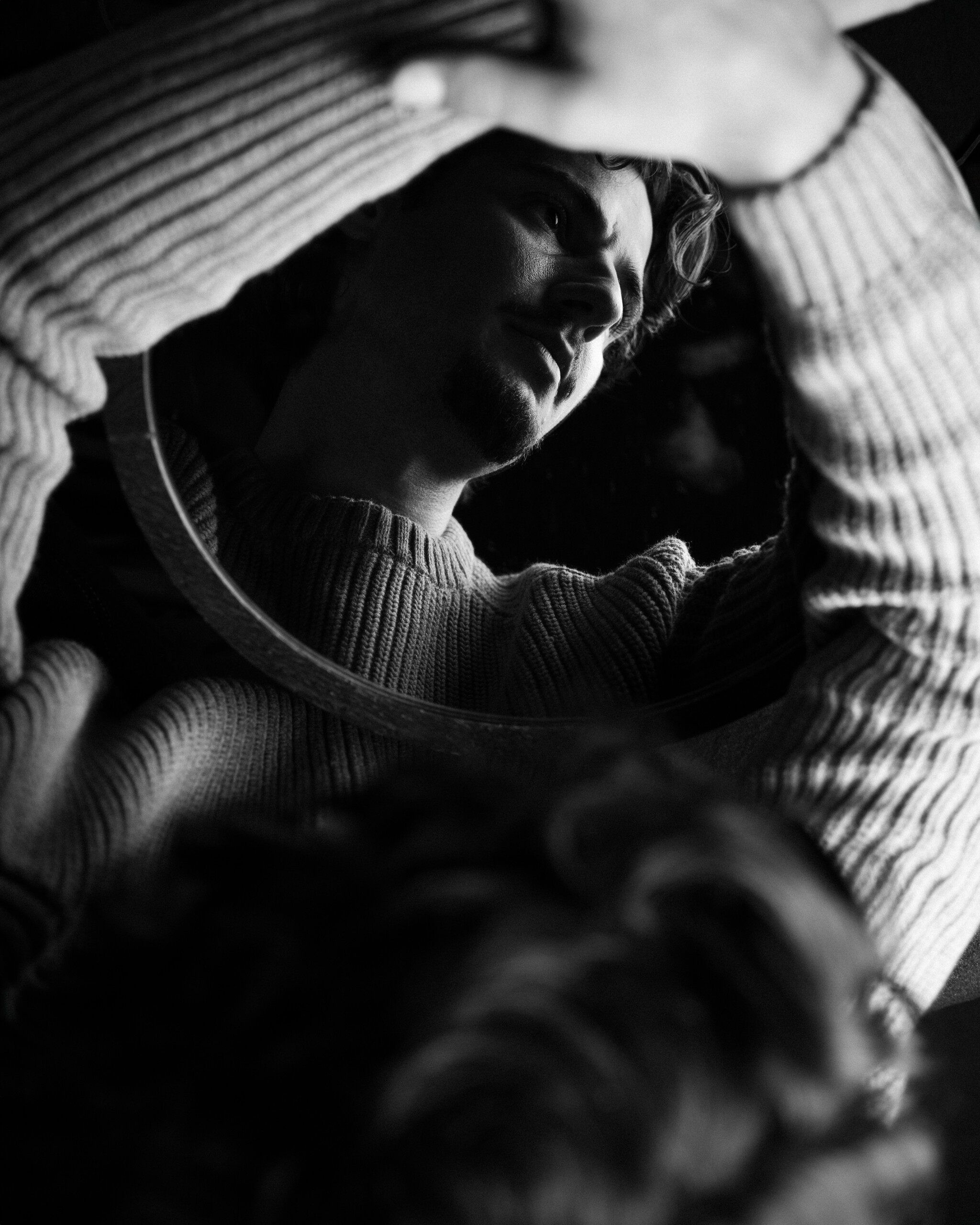
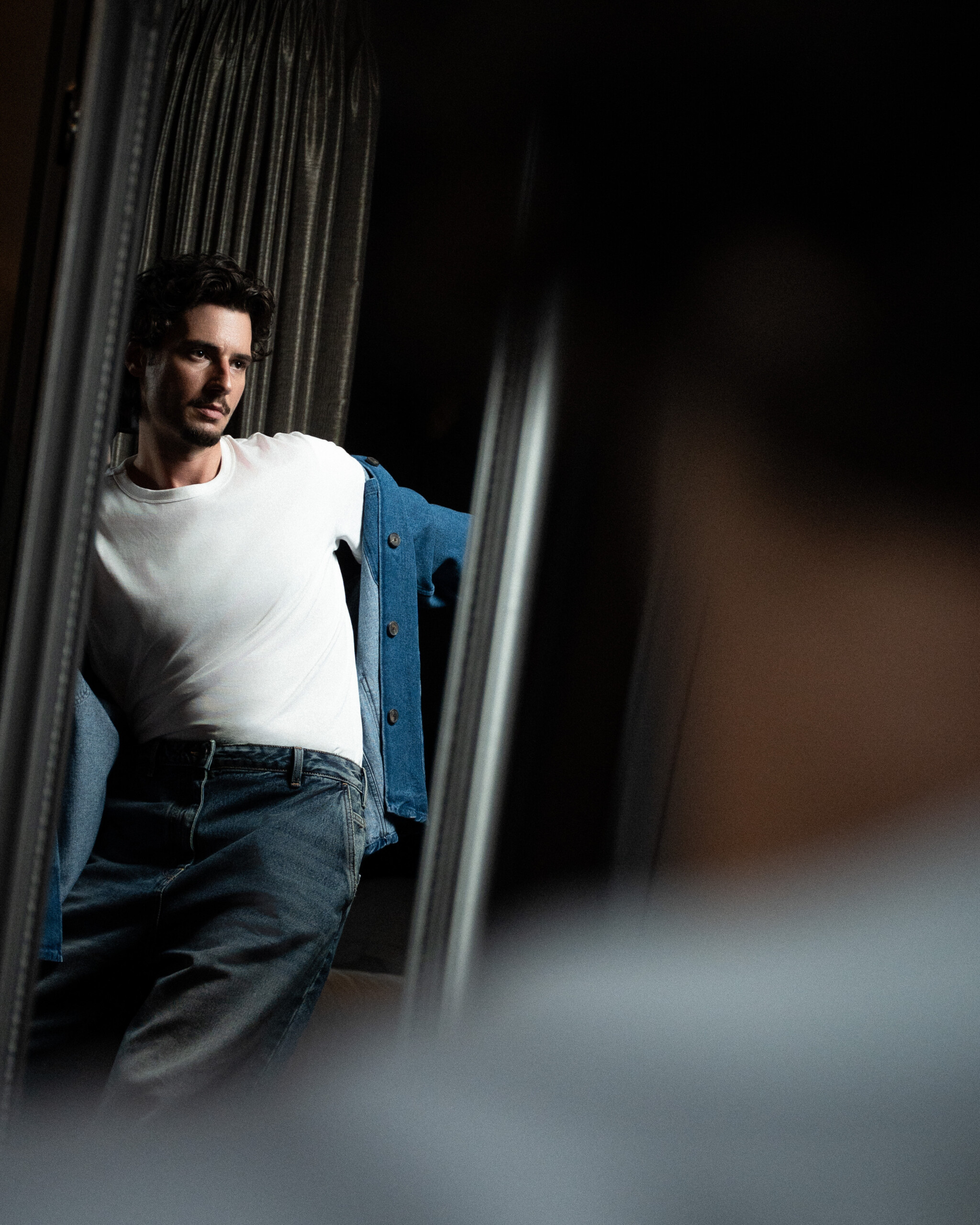
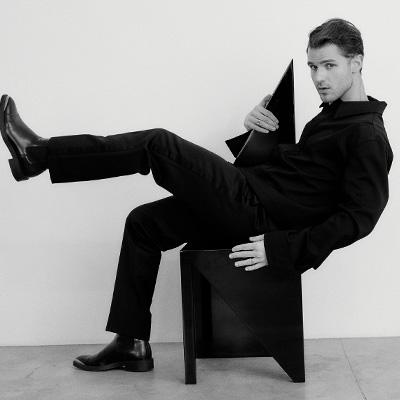
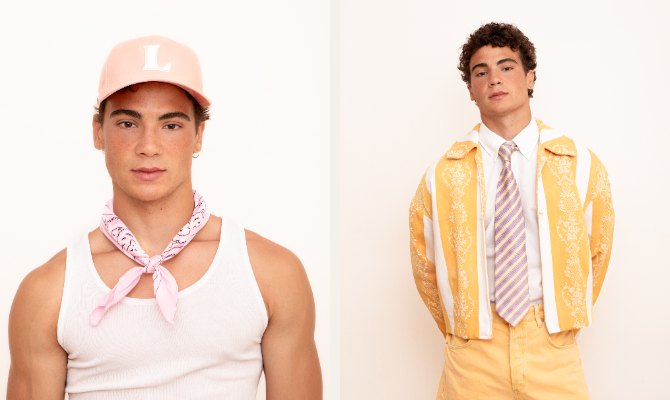
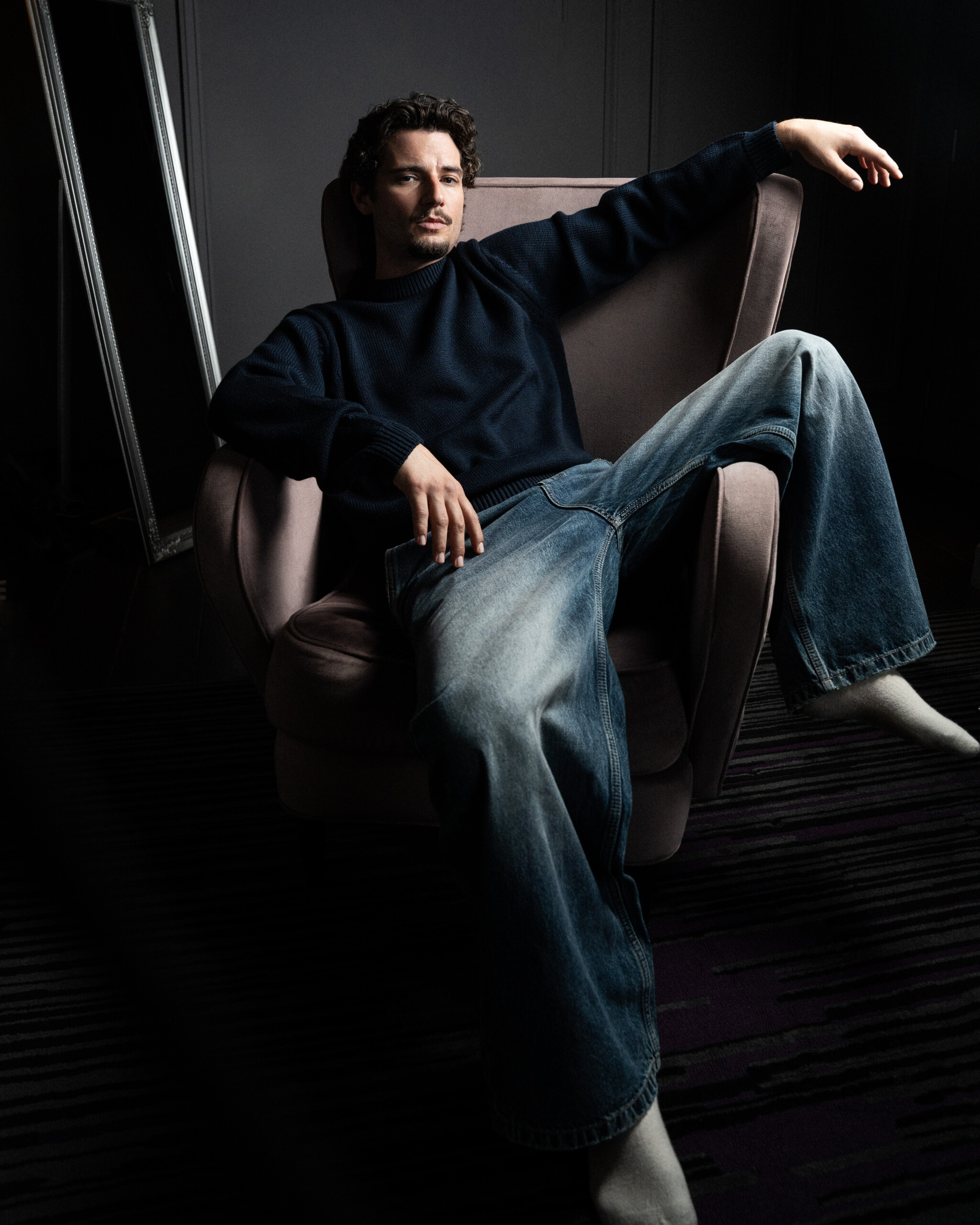
Left, Look 01. Right, Look 05 — Jacket and tee, A Day’s March. Jeans, Pull & Bear.
“I went in blind but fearless, because I didn’t really have another way.”
On Screen
Wolfblood has a following that grew up with the show and has now grown up. What is it like to be a fixed point in someone else’s childhood?
It stays with you. I meet people all the time who remember the show — are you Matei from Wolfblood? We have a laugh and a photo. It was such a fun time, and I’ve met so many people because of it.
A script lands. What tells you, within the first few pages, that the answer is yes?
When the style of writing brings me into the world and the characters seamlessly, the way any good book does. And when you have hope and excitement for it to stay good, so you read on.
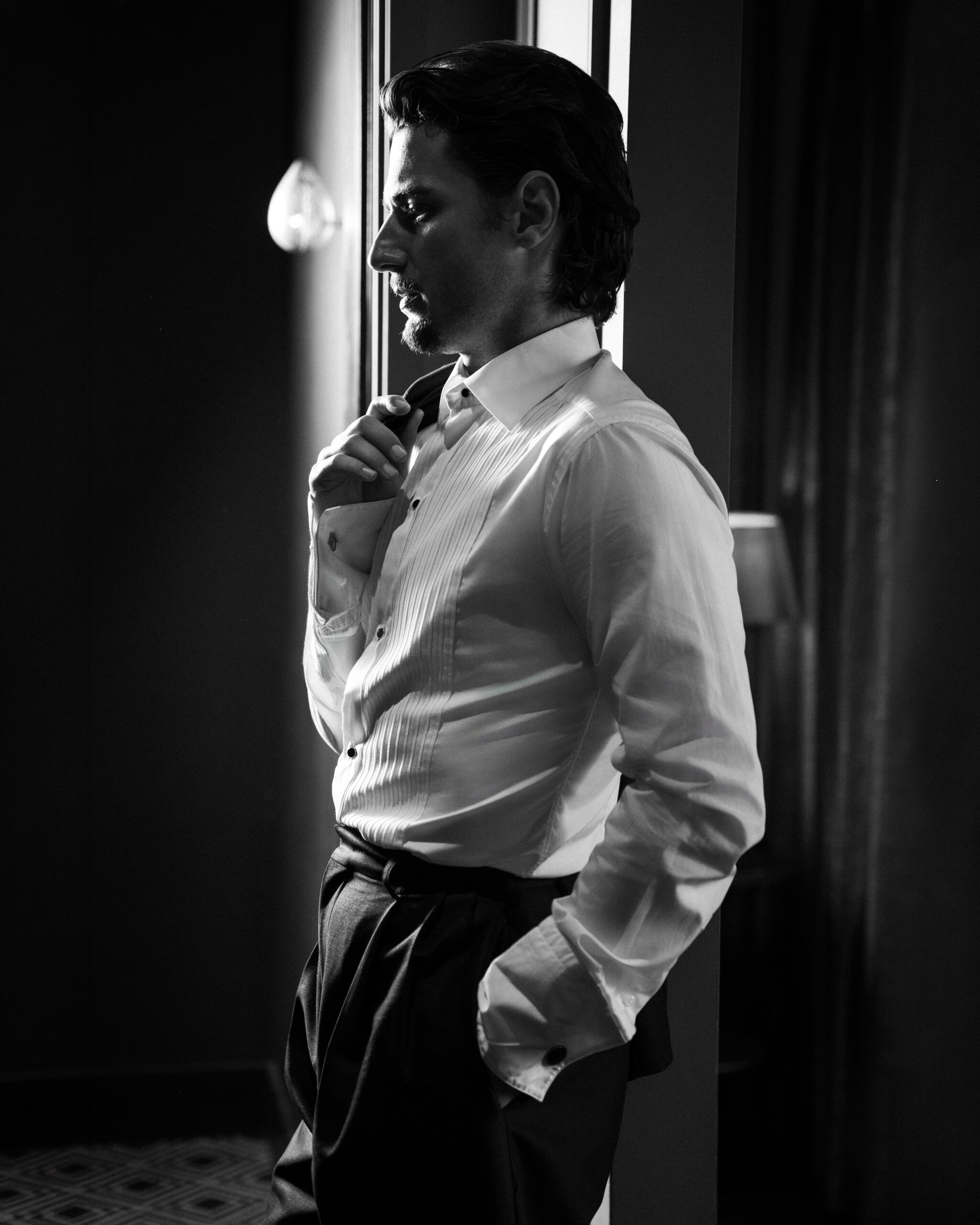
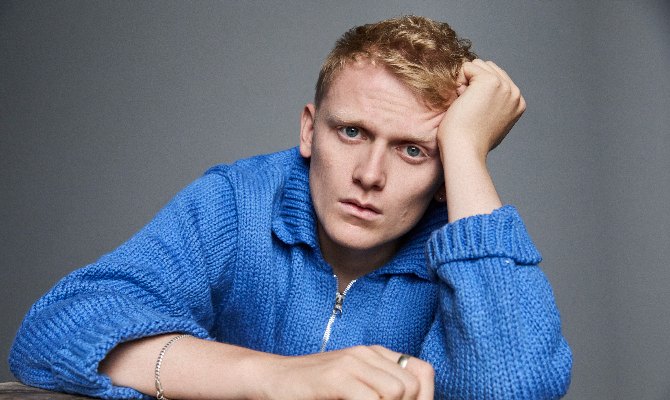
Look 07 — Shirt, ETON. Jacket and trousers, Junho.
A Night Like This
Lukas is a man at the very bottom. Where do you go to find that, and what does it cost to return there every day of a shoot?
The writing had it all there for me to find. I played it as close and true to the writing as I could, with my understanding and my offering of it. It’s all you can do. Sometimes things arrive you never expect.
We shot chronologically, which is rare, and each day led to the next. With full shooting days, getting home was preparing for the next day. It was like doing a play, except each scene was drawn out over the whole shoot. I lived in Lukas’s shoes for that entire time — mainly because there was no real gap between, and being shot in order, the story revealed itself as I was experiencing it, just as the character was on his journey. I shared it in real time.
Flare audiences reportedly refused to believe you weren’t German. How did you build Lukas from the outside in, and did the accent change how he moved?
That was a really nice moment, because I wasn’t expecting it — it was the first time an audience had seen it, and until then you’re only hoping it worked, that people take it as yours and as how you speak.
The German accent gave me a great deal of the character: his body, his mannerisms, things that really weren’t my own. I’d never done a German accent before, so that discovery was new and exciting for me too. It was similar with my character in the Genius: Picasso series, who was French — that affected how I played him massively.
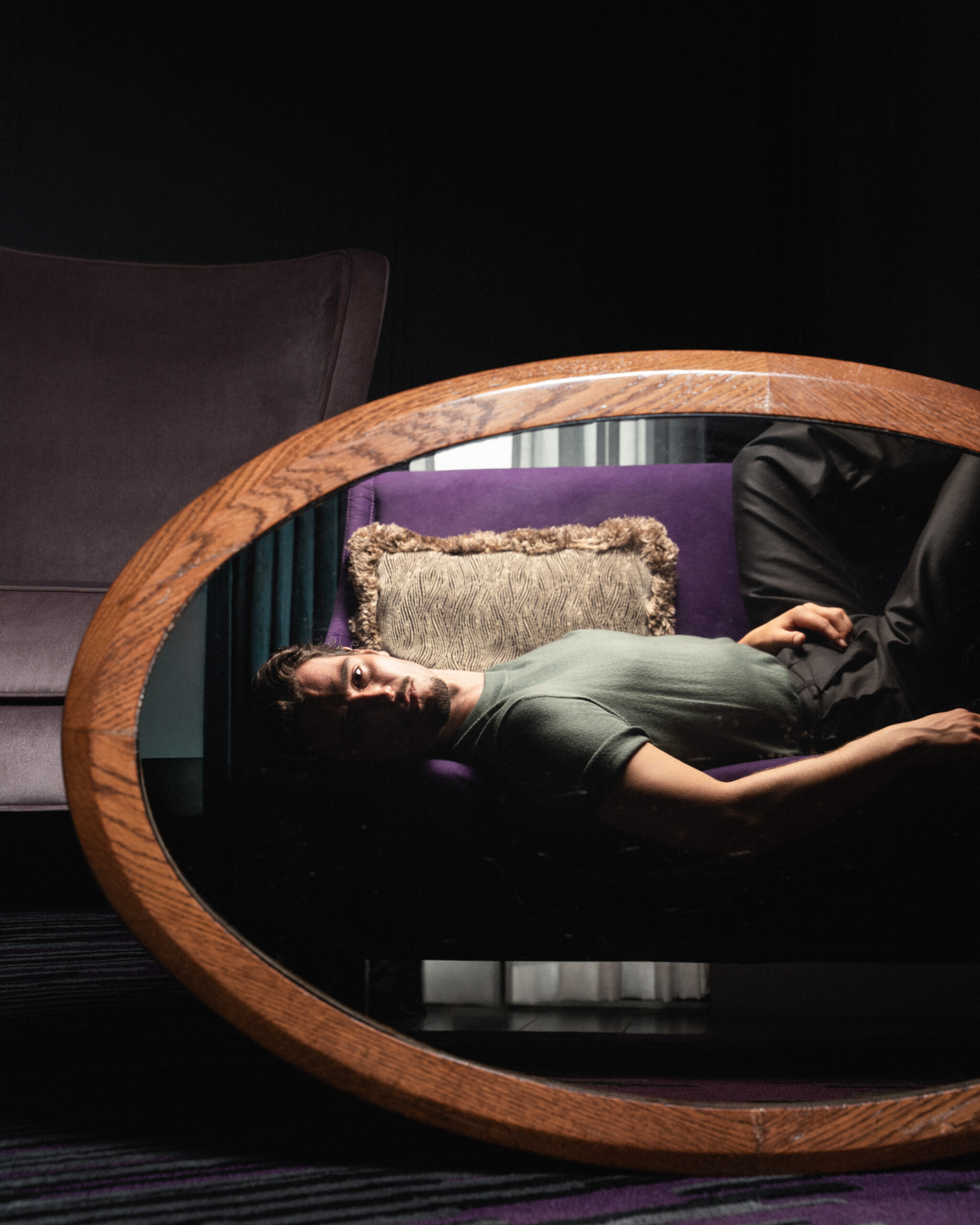
Photographed in a suite at The Mandrake, Fitzrovia.
David Bradley is in the film. What did you take from watching him work?
I’ve seen David, as we all have, in so many of our favourite shows and films, and he’s always unforgettable. It was the same seeing him between takes, sitting in the green room with my mum and my brother, him cracking most of the jokes. So different to any of the characters we’ve seen him play. Mesmerising, I’d say.
He’s a national treasure in my eyes. Getting to work with him, play the scenes with him, him asking us to run lines while the camera was setting up — yes, of course. Masterclass. Let’s play. And we did. He was warm and so professional it was an example to see; someone with all that behind him, still treating the script and the project as if it were the most important thing now. I’ll never forget it.
It has been in the world for the best part of a year now — through Flare, an Audience Award in Italy, a UK release. Has a stranger’s reading of it ever changed what you think you made?
When you’re in it, doing it, you remember how it was all filmed. You’ll never know what it’s like to see it simply as a film, the way an audience sees it for the first time with nothing but what’s in front of them.
The truth is in the eye of the beholder when it comes to offering art in any form. How people have felt seeing it has been an eye-opener — how much what we do with storytelling means to people, and that there are stories that touch a lot of people for very different reasons. It has made me proud to have played Lukas, alongside Alexander, David and the rest of the team. Namely Diego, for writing it, producing it, giving us all a job — and more importantly, trusting me with this part in his film.
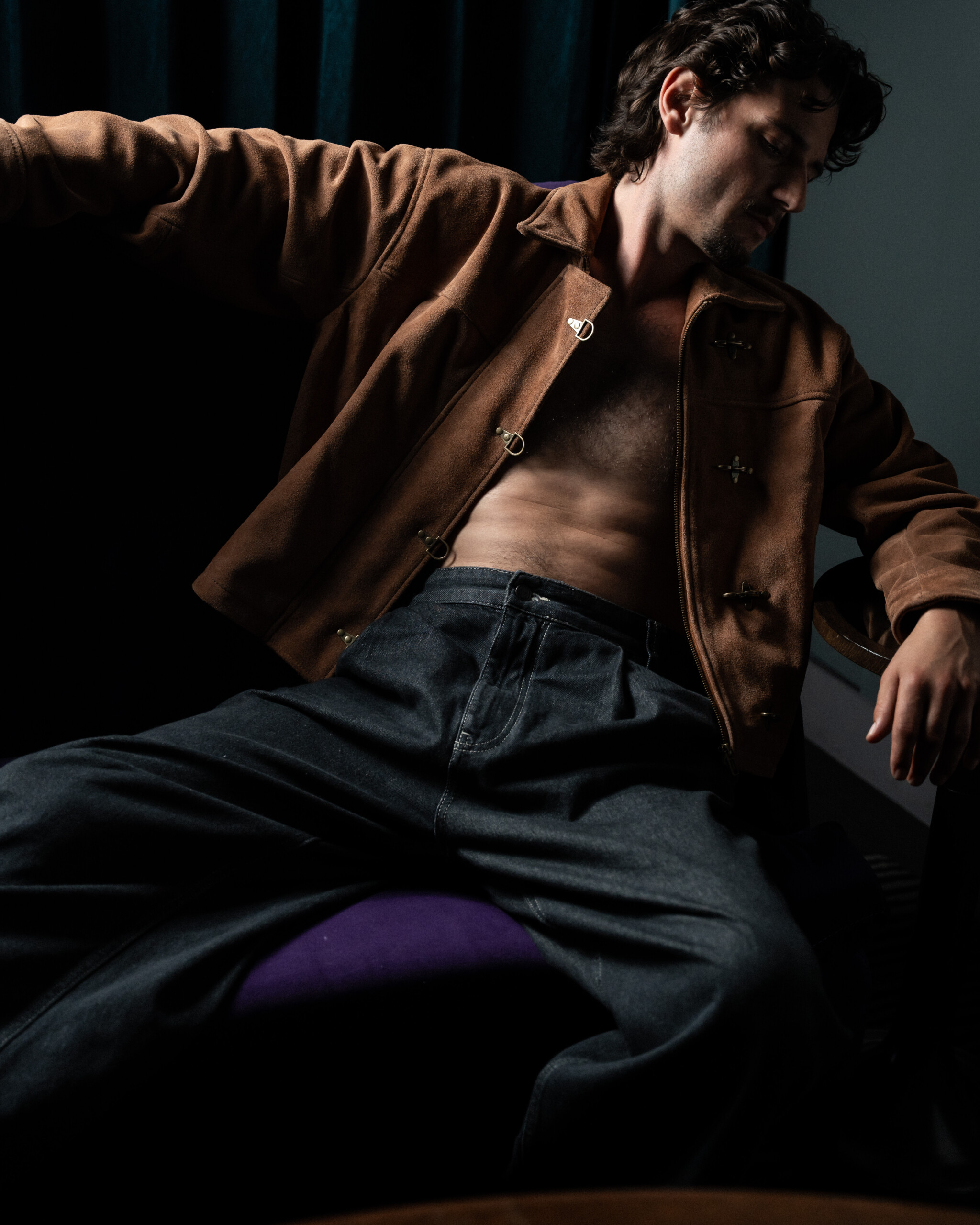
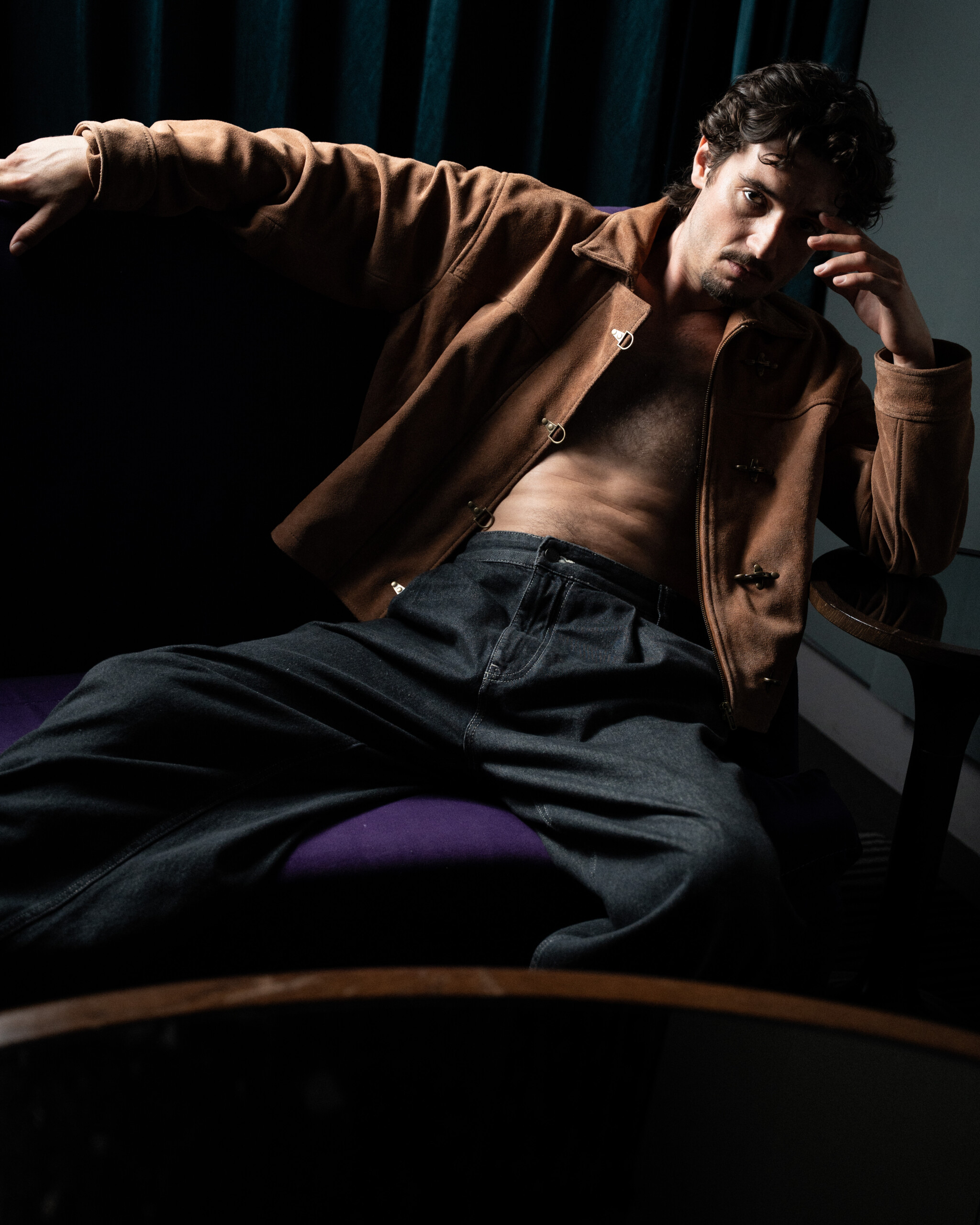
Look 02 — Jacket, Barney’s. Jeans, Pull & Bear. Shoes, Vario.
Style and Presence
You have walked for Dolce & Gabbana in London and Milan. Acting asks you to disappear into someone else. Modelling asks you to be looked at as yourself. Which is the more exposing?
Both are exposing, and both are part of being a showman, a performer. Modelling is a form of acting, for me anyway. I’m not a model, but given the chance I can act like one — which I did, and it was fun.
I think you have to accept, or at least understand, yourself and all your flaws as a performer to really be comfortable enough to have the audacity to play other people. People want to watch and get lost in you when you’re up there, and you can only do that when you’re light and free of fear. Here’s one for you: False. Evidence. Appearing. Real. It’s never that bad on the other side of fear. Normally we say, oh, that wasn’t so bad.
“False. Evidence. Appearing. Real. It’s never that bad on the other side of fear.”
Jack Brett AndersonIs there a piece you have kept from a job, or from a shoot, that you still wear?
The pizza outfit I wear in Don’t Hang Up. They sent it over for reshoots and never came to collect it, so I have the whole costume from that film. I asked for my Wolfblood teeth, because I’d have worn them all the time — that was a straight no. On Citadel I wanted all of the costumes, and all I left with was a pair of keep-warm leggings, which have been worn many a time since. A win, if you ask me.
Grooming tends to be discussed as maintenance. Is there any part of your own routine you keep because it makes you feel like yourself, rather than because a job requires it?
Taking care of my face and my skin. Full body cream, and that routine is steadfast and regimented. It gets me ready for the day.
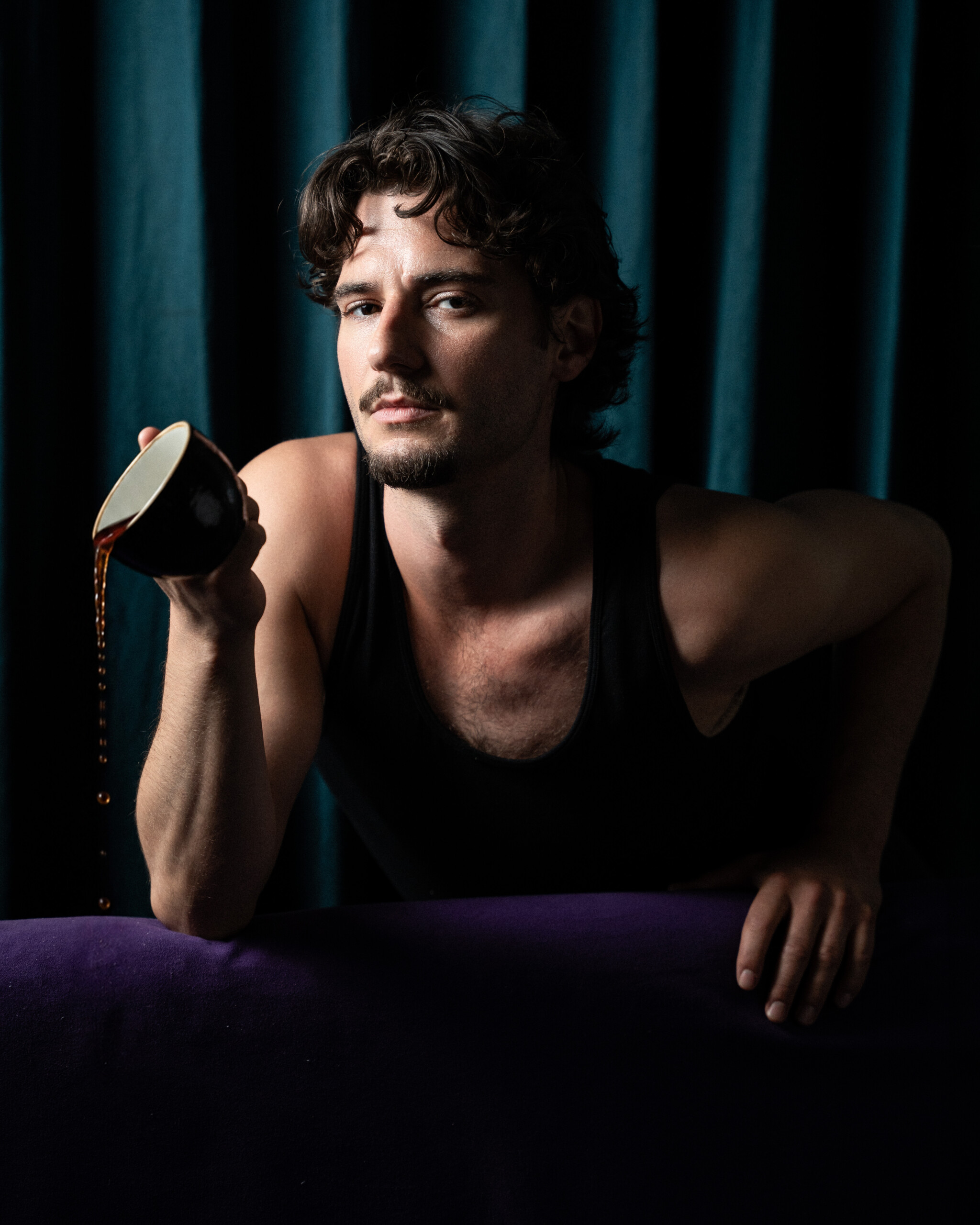
Look 03 — Tank top, FALKE. Trousers, Alexandar Nikolich. Shoes, Vario.
Photographed at
The Mandrake
A suite in Fitzrovia: hanging gardens, velvet the colour of a bruise, and the low London light through tall windows. A hotel that behaves like a private house and photographs like a set.
Fitzrovia · London W1
Beyond the Work
Between jobs is the part of this career nobody photographs. What keeps you steady in it?
My faith. My creativity in other senses. My family are that too — we’re all close, it’s bonkers but beautiful, and so much life happens there. When you’re enjoying life with close ones, and friends alike, that time between feeds me.
Writing fills my cup, but when I start it overcomes me and I’m all consumed. I do rather love that escapism.
London, and specifically which bit of it, seems to matter to you. Where in the city do you go when you need to think?
Born in London, living and growing up in the East End, you take it all for granted — it’s on the doorstep, so you don’t really look. But the Nineties and Two Thousands were such an amazing time, the turn of the century.
One place then and now that I still go to is the end of the runway at City Airport. The waste land you can still drive onto, the planes flying over your head, the water surrounding the airport and Canary Wharf breaking a skyline that’s grown and thickened since. That’s a place for me.
The Insect Life turns on a question its director keeps returning to: if your world breaks, will your support system hold? What is your answer?
I believe you are, and always will be, your own true support system. No one can always promise to put you before themselves, or to be there to meet our expectations — which brings it back to you, always. So if it’s you, then yes, it will hold.
But these stories are written to show us different lenses on worlds we may or may not know, and sometimes it needs to not hold, so that something can be learned.
For the readers who have followed you since Wolfblood and are finding you again now, what would you want them to know about where you are?
I’ve been saying a where are they now Wolfblood film would be cool — cinema release, mature it, as the audience has matured over the years since. Anyway. I’d say I’m here, doing different things, and have done so many since finishing the show, which has been a lovely blessing. It really all started with Wolfblood, and all the love you showed Matei and Emilia. So thank you very much.
Hope you enjoyed the read, and a big hello from me to anyone new.
Credits
Vienna Shelley
Letitia Adejoh · Chyna-Marie Johnson
Laura Roveda
The Mandrake, London
Jade East PR