
LEWIS Brasil · In Conversation
Ítalo Martins and the method of being yourself
From the theatres of Caruaru to the international stage of Cannes, the Brazilian actor has taken an unconventional route to recognition. He talks to our editor, Claudio Harris, about ambition, identity, playing Arlindo in The Secret Agent, and why becoming an actor was never quite a choice.
De Caruaru a Cannes, o ator fala sobre ambição, identidade e Arlindo, seu personagem em O Agente Secreto.
Interview Claudio Harris · London and Brazil
There is something refreshingly unpolished about Ítalo Martins. Not in his work, which is considered and deliberate, but in the way he speaks about it. He has little interest in rehearsing the familiar narrative of the actor who always knew he was destined for greatness. Instead, he talks about uncertainty, difficult decisions, uncomfortable truths and the occasional absurdity of an industry that can make a person’s sense of self dependent on somebody else’s approval.
His journey began in Caruaru, in the Agreste region of Pernambuco, where a school theatre festival introduced him to acting at the age of ten. Years later, after leaving his home state for São Paulo, working as a waiter and spending nearly two years away from professional acting, he began questioning not only his ambitions but the very idea of having a dream.
Today, Martins finds himself in a rather different position. His work in Kleber Mendonça Filho’s The Secret Agent has taken him to Cannes and placed him within a Brazilian film that has attracted considerable international attention. Yet, speaking to LEWIS across an online conversation connecting London and Brazil, he seems less interested in the idea of having arrived than in understanding what the journey has taught him.
And perhaps that is where the more interesting conversation begins.
I
Finding the calling
Claudio HarrisLet’s go back to the beginning. Do you remember the moment when you realised that acting was something you wanted to pursue seriously, rather than simply a childhood interest?
Ítalo MartinsIt started when I was ten. There was a student theatre festival in my hometown, Caruaru, and directors would visit schools to put together productions for the competition. One day, Maria Alves, a theatre director, came to my school. I took part in the production, and that was really where everything started.
I acted between the ages of ten and thirteen, then stopped for a while. My father had passed away, and I was going through a difficult period. I remember thinking that I needed to find something to do again.
I had Maria’s telephone number and wanted to contact her, but somehow I couldn’t get through. The following day, I went to the local library and, completely unexpectedly, I ran into her. I told her I wanted to return to theatre. She mentioned a free course at the cultural centre, so I enrolled.
I’ve never really stopped since.
I’ve always felt that art is something of a mission. You have your own will, of course, but sometimes circumstances guide you in a particular direction. I even left law behind because I realised that I needed to dedicate myself to one thing and become good at it.
“I’ve always felt that art is something of a mission.”
II
Rethinking the dream
Claudio HarrisThe beginning of an artistic career is rarely straightforward, particularly in Brazil. Before the industry believes in you, you have to believe in yourself. How did you navigate those difficult years?
Ítalo MartinsIt was intense and painful. I left Pernambuco at 25 and moved to São Paulo. I worked, studied, joined a theatre company and eventually found myself in a situation where I had very little money and very little acting work. I even worked as a waiter.
There was a period of almost two years when I wasn’t acting professionally. I was studying, but none of it was generating an income. At some point, I started questioning everything. I wondered whether I still knew how to act.
That’s when I began reconsidering the idea of the dream itself.
What is a dream? I think it’s an extremely capitalist concept. We ask children what they want to be when they grow up. Why not just let them be children? They’ll discover things in their own time.
A dream is something that is constantly being created for you. And the person who creates that dream isn’t necessarily the person who can make it happen. You depend on somebody else seeing you, choosing you and giving you that opportunity.
“A dream is something that is constantly being created for you. And the person who creates that dream isn’t necessarily the person who can make it happen.”
During those years in São Paulo, I started asking myself what kind of artist I actually was and what kind of market I wanted to work in. I realised I couldn’t keep comparing my journey with somebody else’s.
I had spent so much time in theatre and cinema that existed outside the commercial mainstream. There was no point in wanting the same things as artists following completely different paths.
Once I understood who I was, I became more careful about what I was willing to compromise. The artistic profession is very delicate because it affects your emotions. Rejection can become personal, and people become frustrated or depressed.
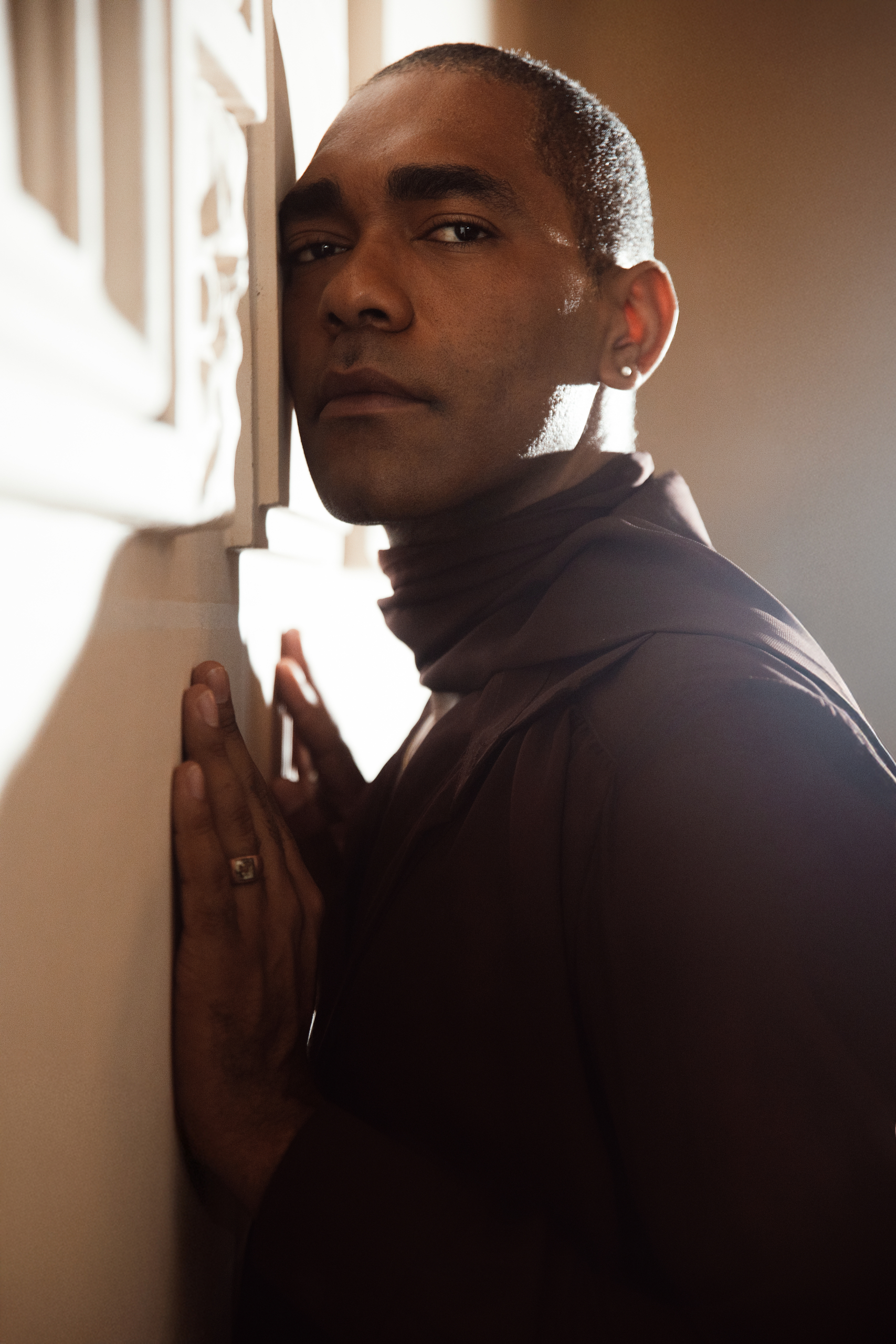
I’m a Black, gay man from the countryside of Pernambuco. There are so many layers to that experience that you have to understand about yourself. Otherwise, you can end up carrying every disappointment as if it were a personal failure.
III
Entering the world of The Secret Agent
Claudio HarrisLet’s talk about The Secret Agent. The film seems to represent an important moment in your career. What did this project teach you as an actor?
Ítalo MartinsWorking with Kleber was an incredible experience. He’s a director who doesn’t need to shout on set. I’ve never seen him change his tone of voice. He’s extremely professional, knows exactly what he wants and gives you the direction you need.
The invitation came through my agency. First, I sent a self-tape, then there was a conversation with Kleber and two other directors, followed by a reading.
I remember that the scene we read was actually the final scene involving my character. When I realised what it was, I joked that I was going to die again!
But the experience was wonderful. We had several readings together, and Kleber was very open to the creative process. He’s accessible and genuinely interested in keeping the character alive.
What I take away from the experience is a sense of professional maturity. Sometimes it takes years for a project to come together, but you begin to realise that your work, your studies and your efforts have been worthwhile. You look at the people you’re working with and the film you’re making, and you understand that you’re on the right track.
Claudio HarrisYour character, Arlindo, is an interesting one. He is adopted into a family connected to the police, and there are complicated relationships within that household. How did you understand him?
Ítalo MartinsArlindo is a survivor. He’s a young man who has been adopted by a family whose father is a powerful police figure. He becomes involved in that world and does what he believes he needs to do to survive.
What I find interesting is the question of where he comes from. I’m playing a Black son adopted into a white family, and you start asking yourself about his history. Who was his family? What happened to them?
He’s treated with affection and respect, but there are subtle differences in the way the family protects him and his brother. His brother is perhaps more protected in certain situations.
Those little details make a difference. It’s not necessarily an obvious expression of hatred or discrimination. It’s something more complicated, a preference in the way protection is distributed.
Arlindo is part of the bad guys, but I don’t necessarily see him as someone who is evil in the same way as others in the film. He’s operating within a violent system. He’s another survivor, doing what he believes he has to do.
IV
Coming home
Claudio HarrisYou have played characters requiring different accents, appearances and ways of speaking. How did it feel to return to Pernambuco and work with your own accent?
Ítalo MartinsIt felt like working from home. You’re at home, and you don’t need to do too much. You just need to exist.
I’d spent time away from Pernambuco, so my accent had become quite mixed. Returning to it was comfortable.
I’ve also worked with a speech therapist, who explained that being able to make different sounds and move between accents is actually a quality. We sometimes receive criticism for our accents, as though we need to correct something about ourselves.
But productions have different requirements, and sometimes you need to speak in a particular way. Being able to do that is part of the profession. Coming home for this film was simply a very natural experience.
V
The method of observation
Claudio HarrisHow would you describe yourself as an actor? Are you instinctive, or do you prefer a more technical approach involving research, psychology and character construction?
Ítalo MartinsI’m an actor who likes to observe. I don’t follow any particular method. The method I follow is my own.
I’m constantly observing people. Sometimes it’s quite annoying! I’m a Capricorn, so perhaps that has something to do with it. I find human beings fascinating, and that’s one of the reasons I love acting.
When I first read a scene, I experience a particular feeling. I consider that the genuine feeling of that moment, that text and that scene.
Then I read it again and discover other possibilities. I take some things and leave others. But I always try to preserve that initial authenticity.
I don’t necessarily look outside myself when I’m developing a character. If the character is based on a real person, obviously, I’ll research that person and their history. But otherwise, once I’ve accepted a role, I want to internalise it.
I remember a theatre director once telling me that I was talented, but that I needed to become a particular kind of actor, somebody whose performance had something distinctive about it. There are thousands of talented actors. What matters is finding something genuine that belongs to you.
It might be good or bad, but it’s yours. And it’s true.
“There are thousands of talented actors. What matters is finding something genuine that belongs to you.”
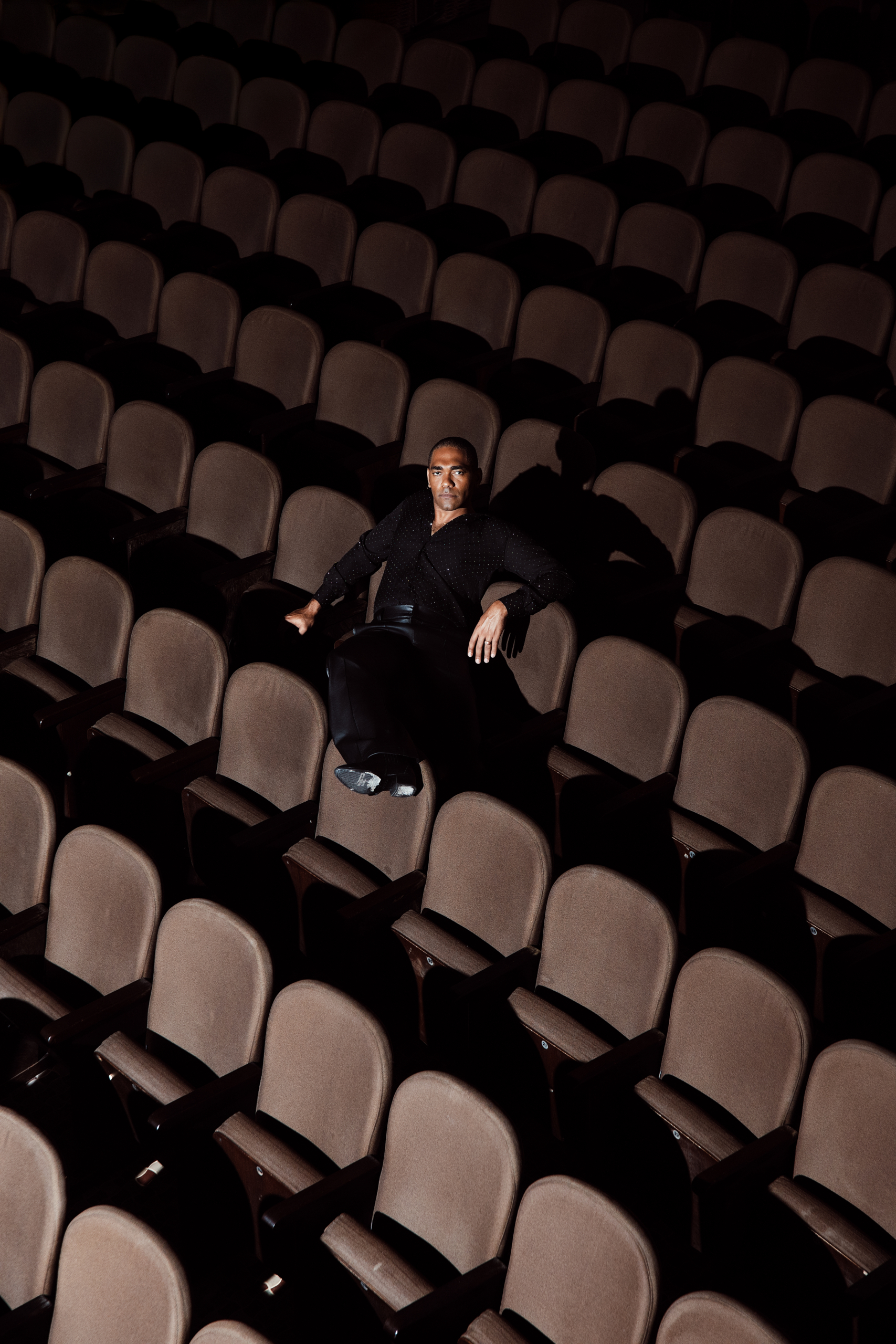
VI
Beyond the character
There is a particularly personal dimension to Martins’s relationship with the characters he plays, one that emerges when our conversation turns towards the subject of loss.
His father was murdered when he was eleven. When Ítalo reached the age of 33, the same age his father had been when he died, he found himself facing a serious period of depression. He began to recognise a connection between that experience and the number of characters he was subsequently cast to play who met violent or premature deaths.
Claudio HarrisYou mentioned that you sometimes bring something of yourself into a character. Has that relationship with personal experience become part of your process?
Ítalo MartinsMy father was killed when I was eleven. When I reached 33, I became depressed. I didn’t think I would live beyond that age.
I later spoke to friends who had also experienced losing someone when they were children, and I realised that this feeling wasn’t unique to me. Many people grow up carrying that kind of experience.
What’s interesting is that, around that period, I started receiving characters who died. In therapy, I began understanding that this idea of death, which had been sitting quietly inside me for so long, was perhaps starting to find another way out through those characters.
It’s almost as though I was trying to approach that pain, to bury it or somehow bring it to an end.
For Arlindo, I think I brought something of that experience: the feeling of another young Black man whose life is shaped by violence.
It was very personal.
Recife · Cannes
“Your body is there, but sometimes your mind hasn’t quite caught up.”
“O corpo está lá, mas às vezes a cabeça ainda não chegou.”
VII
A different perspective on Brazil
Claudio HarrisHaving now seen the finished film several times, what is your reading of it? Has your understanding changed since you first worked on it?
Ítalo MartinsI think it’s one of Kleber’s most mature films. The script, the cast, the music, the photography — everything feels very accomplished.
It’s a film that speaks about an important period in our country’s history from a different perspective. It decentralises the usual focus on São Paulo and brings Recife into the conversation.
That’s important. Sometimes we discuss the dictatorship as though it only happened in Rio de Janeiro or São Paulo. But it happened throughout Brazil.
Around 80 per cent of the film was shot in Recife, with other scenes in São Paulo and Brasília. It’s a very Pernambuco film, with a strong Northeastern identity.
When I went to Cannes, everything was new. I’d never experienced anything quite like it. You’re sitting in a packed theatre, surrounded by people, watching the film and trying to understand what is happening around you.
I don’t even know whether I properly watched the film the first time. I was almost anaesthetised by the experience. I watched it several times during the premieres, and only afterwards began to process everything.
It’s difficult to describe going from Pernambuco to Cannes. Your body is there, but sometimes your mind hasn’t quite caught up.
I’m incredibly proud to have been part of it.
For Martins, the experience of The Secret Agent is not simply another credit on a growing filmography. It is a meeting point between a particular artistic journey, a personal history and a story about Brazil that deserves to be seen beyond its familiar geographical and cultural centres.
Perhaps his most revealing observation, however, came much earlier in our conversation: the idea that an artist needs to understand who they are before allowing the industry to tell them who they should become.
From a school theatre in Caruaru to an international film festival, Ítalo Martins appears to have learned that recognition is only one part of the equation. The more difficult work is finding a way to remain yourself while inhabiting somebody else’s story.
And that, perhaps, is his method.
The film · Ítalo Martins on LEWIS
Watch the film on Instagram
Credits
- Talent
- Ítalo Martins
- Interview
- Claudio Harris
- Direction and concept
- Borges and RAVMES
- Director of photography
- Borges
- Art direction
- RAVMES
- Editing
- Borges and João Maria
- Fashion styling
- Maria Luísa Lisboa
- Assistant styling
- Eduarda Arcoverde
- Wardrobe
- Ítalo wears algobao
- Beauty
- Gy Mavie
- Management
- RAVMES
- Special thanks
- Teatro do Parque and Cadu Sales
- Film
- The Secret Agent (O Agente Secreto), directed by Kleber Mendonça Filho
- Edition
- LEWIS Brasil