
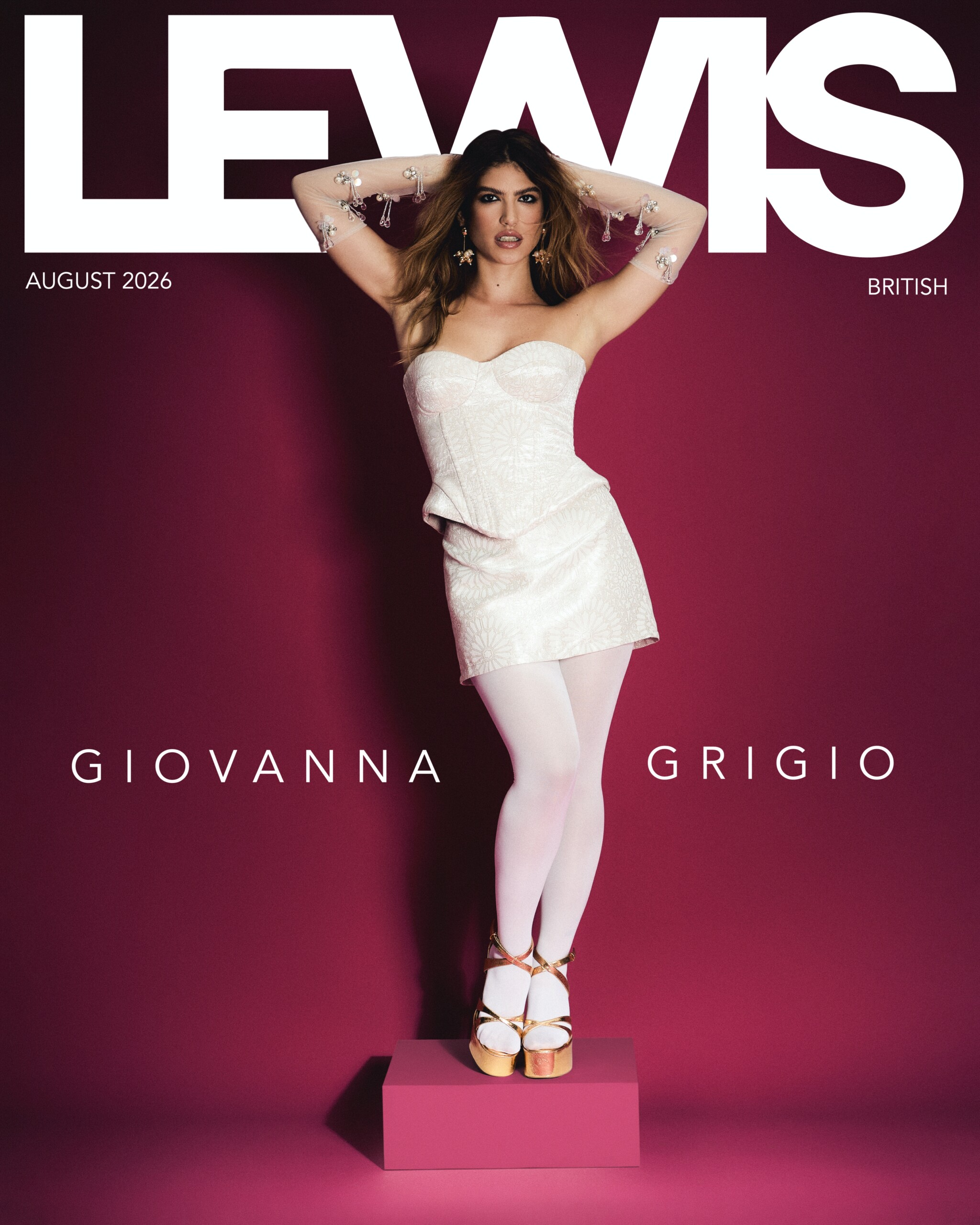
Giovanna Grigio says the part of her job she most enjoys is crying in a rehearsal room. Not the premieres, not the applause, but the particular despair of being convinced she will not manage it. It is an odd admission from an actress in the middle of the most conspicuous year of her career, with two films and a Netflix series arriving within months of one another and a leading role in each. She has been working since infancy, first in advertising, then in the theatre studios of São Caetano do Sul, and has spent the nearly two decades since moving with some deliberation between registers: the teenage phenomenon of Chiquititas, the adult melancholy of As Five, Netflix’s Rebelde, for which she was cast before she spoke Spanish, and the true crime weight of Maníaco do Parque. What surfaces across all of it is not ambition, exactly, but restlessness. She calls the discomfort a growing pain, and appears to have built an entire career around going looking for it.
I. The moment: three leading roles at once
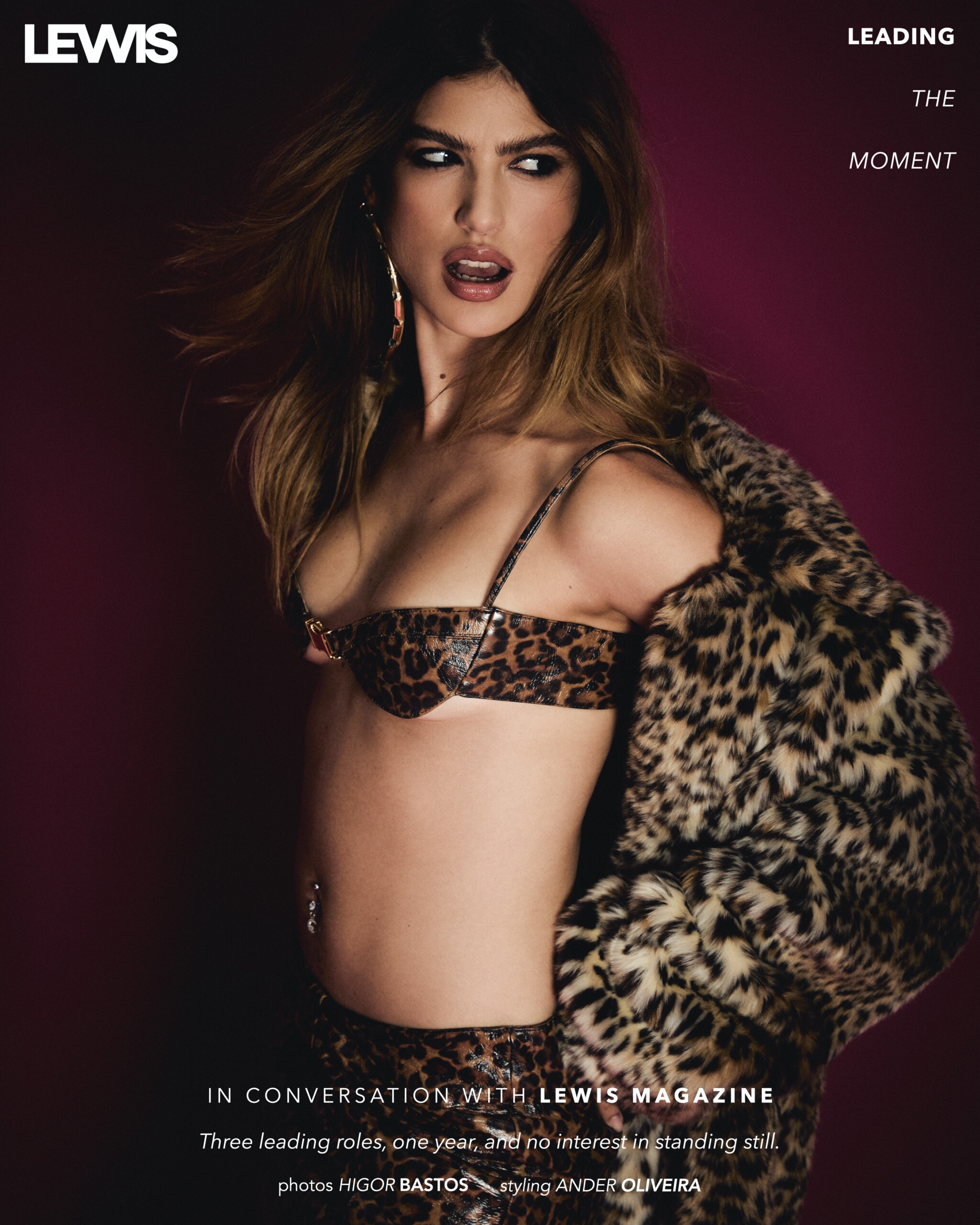
You are living a rare moment of triple leading roles, Sofia, Mia and Valentina, two films and a series almost in parallel. What is it like to inhabit three such different women at the same time, and what does each of them demand differently of you?
There are moments in life when some beautiful synchronicities happen. This year has been a very happy one for me. Making my debut in these three leading roles in the same year means facing the result of many years of genuinely passionate work. Of course, each of my characters had her own moment. First Mia, at the end of 2024, who demanded courage from me to explore something different, because she asked me to give myself over to the magical and the comic in the same measure that she asked for absolute truth. My reunion with Sofia, last year, was very important to my maturing as an actress, which somehow goes hand in hand with my maturing as a person. I like feeling challenged in my roles, and going back to playing Sofia, even though I already knew her, is still intriguing. Then at the start of this year, Valentina made me fall in love with comedy. She loosened me up on set, she entertained me like nothing else. I am looking forward to each of these releases. Trago Seu Amor has already opened, and it was wonderful.
In “Encontrada” you meet Sofia again, a character who is already yours and who audiences have loved since “Perdida”. What changes inside you when you return to a beloved role rather than building someone from nothing?
I felt the pressure from the beginning. I always feel the weight of the audience’s expectation and I am very demanding of myself. In Encontrada I allowed myself to loosen up and detach a little from the idea people have of the book, because I am a reader too and I understand that when we love a story we have an ideal of how we want it told. But I also understand that everyone imagines it differently, and if we are always worried about pleasing everybody, we end up limiting the creativity of our own work. I love Sofia, and her questions touched me deeply during the making of the film. Dealing with the consequences of our choices, and the challenges that come after “happily ever after”. The need for independence and autonomy, and the social pressure carried by the era she chose to live in. Sofia matured and I went with her, headlong, and I am grateful for that, because it was exactly what I wanted as an artist.
In “Trago Seu Amor”, Mia is an egotistical, charismatic witch whose kiss makes anyone fall in love with her, and a character carrying real symbolic weight and LGBTQIA+ representation. What drew you to her, and what do you hope audiences take from the story?
I love stories with magic, and I love imperfect characters like Mia. I was also charmed by all the symbolic weight that a young, light film can carry. The fact that the characters are free to love whoever they want, with no obstacle other than their own will, carries a very powerful message. We are talking about emotional maturity in the face of unrequited love, and also about consent, once we understand that in this universe you cannot enchant someone without their permission. I like being involved in productions that say things I believe in. It is my way of expressing myself as an artist too. That is why I feel so much and give so much to my characters, because I believe in them.
“Os 12 Signos de Valentina” arrives on Netflix in 2026. What seduced you about Valentina, this young woman who turns a romantic disappointment into a personal experiment, becoming involved with a boy from each star sign and recounting it all on a videocast?
Valentina is one of those characters I most enjoy playing, full of contradictions. And it was with her that I understood how much I love comedy. Her story is compelling, and the astrological theme speaks to audiences. She is an Aries, and the archetype she inhabits demanded a strength, courage and impulsiveness from me that I did not even know I had to lend her. At the start of rehearsals I remember feeling outside my comfort zone because, as a Capricorn, I am very rational, and the quick-wittedness that comedy and Valentina both had seemed difficult to reach. I ended up judging myself and getting in the way of my own process. Working with Hugo Possolo, coach, genius, clown, was wonderful. Discovering that freedom to throw myself in and enjoy myself more on set liberated me somehow, and that is how Os 12 Signos became one of the most enjoyable projects I have ever been part of, and also where I got to explore myself as an actress at all sorts of different voltages, from the truest drama to the wildest madness.
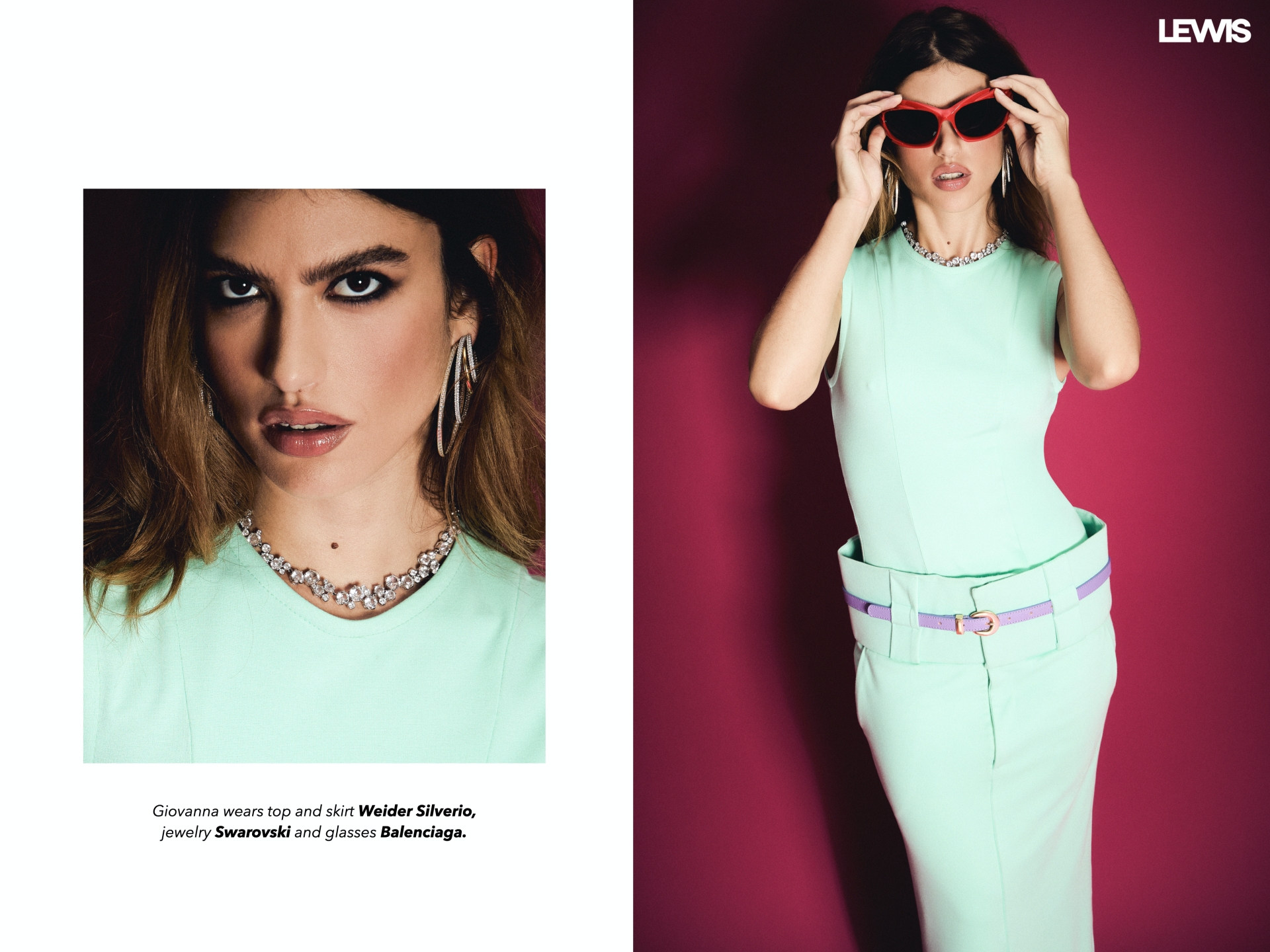
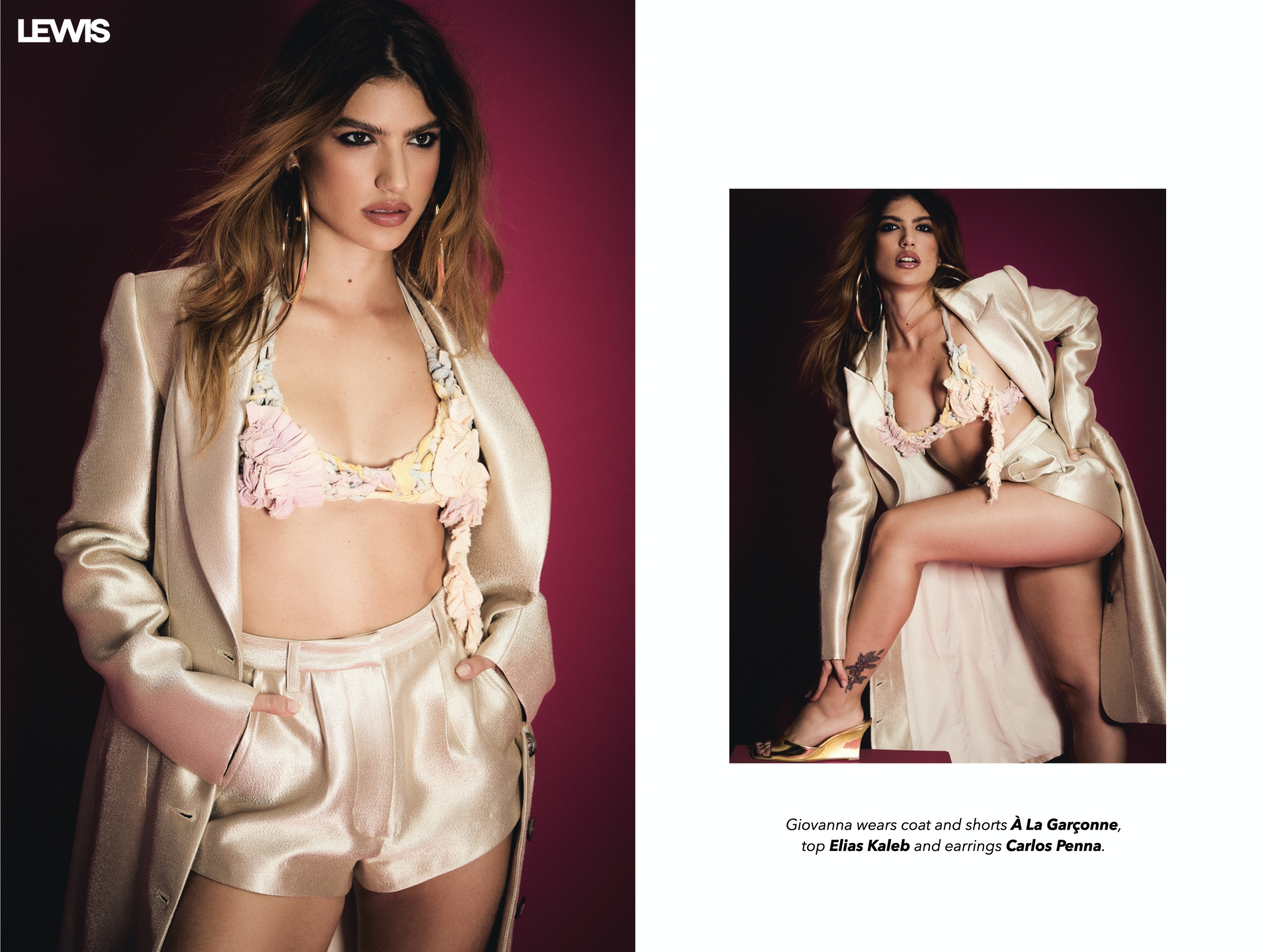
After so much film and streaming, you return to the soap with “Por Você”, as Leandra, daughter of the characters played by Alinne Moraes and Thiago Lacerda. What makes you want to return to television drama at this point in your career?
I was introduced to audiences through soaps, very young, and it was on television that I became certain I wanted to follow this career. From then on things happened very naturally and I had the privilege of a steady career, always working on good projects, from theatre to streaming and above all cinema. Coming back to television after living through so much outside it has been delicious, fun and stimulating. It is a different game, one I was no longer used to, and I am loving it. It is a dream to work with Alinne and Thiago. They are a reference point for me and they are extremely generous. We are always exchanging and building this relationship together, and I am learning a great deal from them. Leandra is an interesting character, full of conflicts, and I am glad the wider public will be able to watch my work again, now that I am older and more mature as an actress.
II. Roots: growing up in front of the camera
You started as a baby, in advertising, and effectively grew up on set. What memory do you keep of the moment acting stopped being play and became a job?
They say Capricorn children are born old, and somehow I always knew it was not just play, that it was work and demanded responsibility. Even so, it was a great pleasure for me, even the harder parts, like the waiting around at auditions. For me that was time I got with the other children to play before work started, and I think I am still a bit like that today. Being on set, beyond the work, is being with my friends, with people I admire. It is my natural habitat, where I have met so many people I love and lived through so many good things, both on camera and in the dressing room. It has been my favourite place for as long as I can remember. The desire to be there and to stay in this career always came from me.
Mili, in “Chiquititas”, was a phenomenon that marked a generation, and one that still travels with you, not least through the music. How do you look now at that girl, and at what the role built in you?
I look at Mili very fondly. Chiquititas opened the doors to television for me, and it was a great school. It is lovely to look back, to remember myself at that time, to remember the dreams I had and how many of them I have realised since. It is funny facing teenage Giovanna. I was still raw about a great many things. But I think it is wonderful to have been part of a project that meant so much to so many people. I receive that affection with a great deal of joy and pride.
At the end of “Chiquititas” you chose not to renew your contract and to start again. What gave you the courage to give up such a comfortable position so early?
I have always seen my career over the long term. My dream, from very small, was to be a film actress and to explore the many faces an actress can have. After finishing Chiquititas I was very happy with the result of my work and excited about what might come. I wanted to be open to the opportunities that interested me, and it was important to have courage, because that decision is what built the path I have taken, and I know it was the right choice. Settling was never an option for me. I just wanted to act, and to live stories that interested me at the time as a viewer too, that I would want to watch, and that would challenge me.
III. Maturity and choices
Samantha travelled years with you, from “Malhação: Viva a Diferença” to “As Five”. What was most challenging about maturing a character in real time, alongside your own adult life?
I think the hardest part of following the character’s maturing was that she aged faster than I did. During Malhação I was three years older than Samantha. By the time we reached As Five, she was three years older than me. Which at the time meant a great deal that I only came to understand once I was older myself. I remember it being difficult to understand the character’s changes. I did not yet have any grasp of the transformations adult life brings. I feel that today, watching the series, I understand it better. And I think that despite the difficulties, I managed to deliver the bearing the new Samantha asked of me.
Your filmography moves from the popular appeal of “Cinderela Pop” to the weight of “Maníaco do Parque”. Is there a thread behind such different choices, and how do you decide what to take on?
I like being enchanted by stories, by the challenges the characters bring me, and believing in them. I like wandering through different genres. Versatility interests me as an artist. And each moment in life brings opportunities that surprise us too. In this career it is not only us taking control of things. Most of the time the opportunity sweeps us up out of nowhere. And I like being open to the most unusual characters I can explore.
IV. International reach
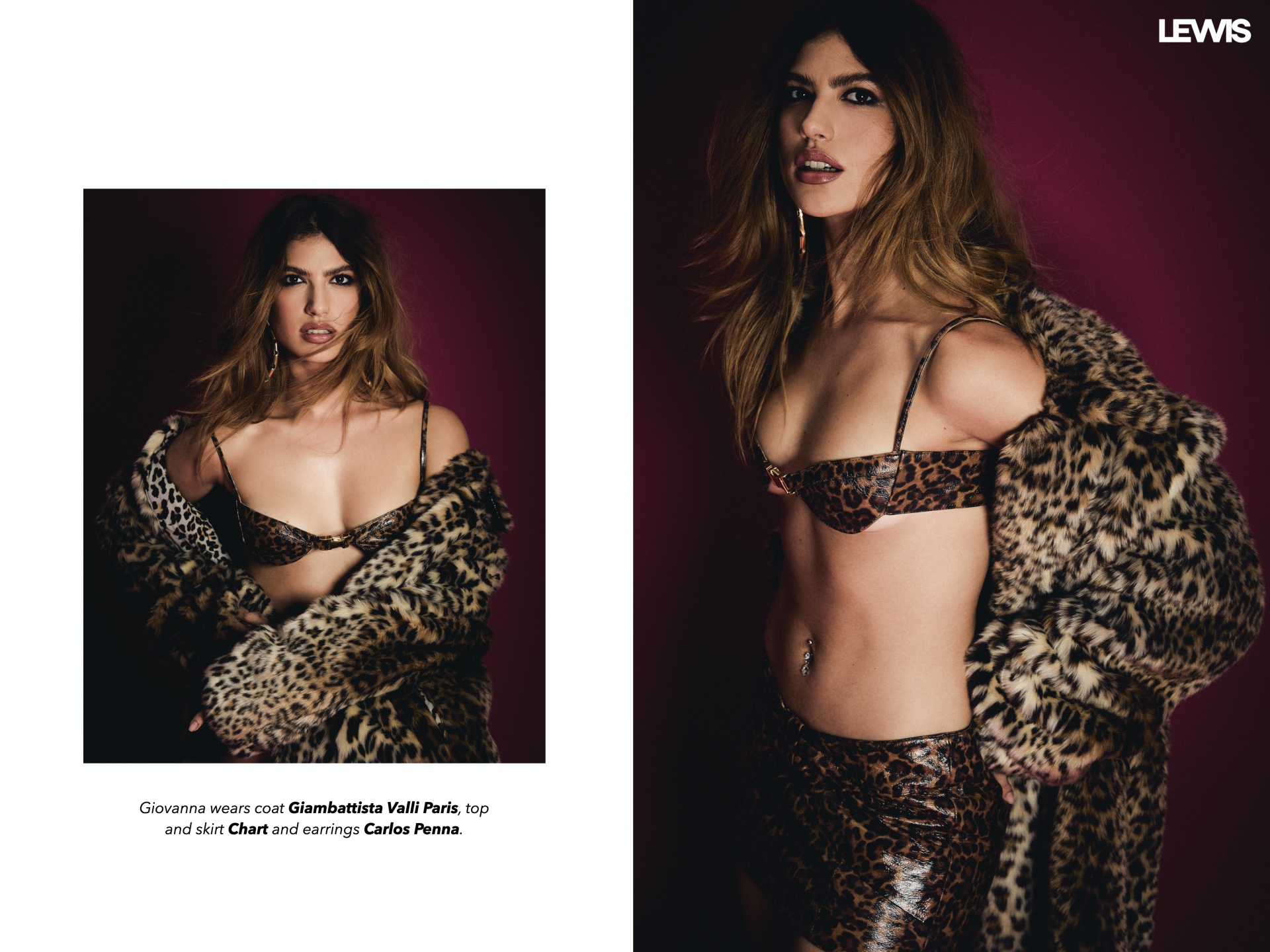
“Rebelde” was filmed entirely in Spanish, and you were cast before you had mastered the language, after flawless auditions. What was it like to work through that challenge, and what did it teach you about your own process?
I consider myself a very courageous person, especially when the challenge is a large one. I learned from that experience that I am capable of a great deal. I like learning new things, so for me learning a new language was not an obstacle, it was an opportunity. I met people from all over the world, and I understood that a set abroad, for all its differences, has a lot in common with the way we work here. So I think everything I had considered impossible, or very far from my reality, took on a reality that made it all more interesting. I am desperate to act in Spanish again. It was a wonderful experience that made me very happy. It helped strengthen my self-esteem and it also widened my dreams and ambitions.
Emília won a legion of fans across Latin America. What changes in your relationship with an audience when it stops being only Brazilian and becomes Latin American?
To be honest, it still surprises me. The Latin American audience has an energy that is a sister to ours, and in the same way that Brazilians welcome people from outside warmly, the audience outside welcomed this Brazilian warmly. Being in contact with my Latin colleagues, I understood a great deal about who I am as a Brazilian. You see a lot about yourself when you are in contact with difference, and I find that exchange enormously enriching. I love meeting new people from everywhere in the world, to exchange and to learn.
V. The craft: how a character is built
You have played everything from a party-loving teenager to a journalist immersed in one of the country’s most shocking crimes. When a role arrives, where do you start building the character?
Every process is its own, and I use a great deal of intuition to understand what each one asks of me. The script, for me, is the character’s bible. I start from the text and look for everything I need there. Often, during rehearsals, the questions answer themselves. I also very much like using writing creatively. I write what the character thinks and feels as a form of discovery, and drawings too, though in a more subjective way. I also think it is important to understand the environment the character is placed in, everything very concrete, so as to build a solid base for my imagination to flow and for me to create freely.
Between romantic comedy, thriller, fantasy and historical drama, is there a register in which you feel most at home, or is it precisely the discomfort of the new that moves you?
At the moment I feel very comfortable in comedy, but a few months ago it was precisely my area of discomfort. I joke that what I really enjoy is crying in the rehearsal room, feeling a certain despair, thinking I will not manage it. When I feel that, I know I am leaving my comfort zone, and it is a growing pain. I like that adrenaline. I do not like anything that comes too easily. It does not move me, it does not interest me.
VI. Recognition, the feminine and representation
You joined the Forbes Under 30 Brasil list in 2023, in Dramatic Arts. What does that kind of recognition mean for someone who has, in practice, been working since childhood?
I am very happy about it, because it really is many years of dedication. It was my childhood in advertising that took me to my first theatre class at seven, and it was the years of theatre that prepared me for television. Which in turn opened up paths in cinema, and in streaming, which was not even a possibility when I started. I do everything with a great deal of dedication, respect and patience in the process. I used to be more anxious for things to happen immediately, but today I understand that even at a young age, under thirty, I am a professional with a great deal of experience. The time I have in life is the time I have in my career, and one does not exist without the other. What matters most to me is that my art truly touches audiences, as I feel it does with me, and recognition comes when it has to come. As I said earlier, I like to build over the long term, and for that you cannot be in a hurry for the harvest. 2026 is a beautiful year of harvest for me, but it did not come from nowhere. The Giovanna of the past planted a great deal so that I could be standing where I am today.
Many of your recent roles put the female perspective at the centre, from Sofia to Mia. Is that a conscious choice, a curation of your own career?
Actually I think it is a combination of things, and female leadership is a strong and important subject today. It is always more important to me that the character be complex, layered and human than that she be the lead. But we have spent a long time consuming stories about men, told by men. Narrative from a female point of view interests me as an actress, but it also interests me as a person and as a political being in this world. I want women to see themselves in my characters, and for those characters to inspire them to be protagonists and owners of their own narratives.
VII. Beyond the screen: theatre, art and digital life
In your personal project @escondegrigio you share illustrations and “small poetic universes”. What does that more intimate space give you that acting does not?
Escondegrigio is a space of pure freedom, including the freedom not to be there. I often go months without updating the page, but I respect my artistic process. I do not share what I do not feel like sharing, as though it were only to keep things ticking over. Drawing is where I can practise art without pressure, without expectation, pure expression, and I think that is partly why I have avoided professionalising that part of my life so far. Several of the pieces I share with my audience are made in diaries and in intensely private moments. There is a lot of beautiful work I keep only for myself. It is also where I let myself create with no objective at all, letting out whatever is in me with no plan whatsoever.
With more than 6.6 million followers, you balance exposure and authenticity. How do you preserve what is true in an environment that demands constant performance?
I do not like the feeling of performing, and I consider myself a reserved person, despite my extroverted personality. I like using social media to exchange with audiences, mainly about the work I am involved in, and also about what interests people. My personal life, though, is mine alone. That care matters a great deal to me, for the sake of my own wellbeing, but also because I believe my person should not be bigger or more important than my art.
Theatre, from “Confissões de Adolescente” to “Aprendiz de Feiticeiro”, is part of your training. What does live performance still teach you that the camera cannot reach?
I miss doing theatre so much. I have been feeling the stage calling me again. There is no better place for an actor than the theatre. With every performance we can discover something new, surprise the audience and surprise ourselves. Having people there, reacting live, really does have something magical about it. And no technology replaces the pleasure of going to the theatre and immersing yourself in a story being staged here and now, in front of you. It is powerful and transformative. Going to theatre classes as a child was my favourite moment of the week, and I miss being that close to an audience terribly.
VIII. Aesthetics, culture and what comes next
You move easily between screen, fashion and culture. What does fashion represent for you today: a language, an armour, a game, or all of it at once?
Yes, all of it at once. I have always liked using fashion to express myself and to discover myself. I like to vary, to be a different way each day, a walking metamorphosis. Fashion interests me above all as a code. I like trying to understand people through their clothes too, and silently saying who I am by the way I dress.
Looking ahead: what story have you not yet told that you dream of telling? What kind of artist do you want to be in ten years?
So many. I want to tell so many stories, and the good thing is that the possibilities are infinite. Lately I have been interested in horror cinema, and I also dream of doing a biopic, of playing someone who really existed. It must be a fascinating process to go through. In ten years I imagine myself working on increasingly mature projects, and also venturing not only into art but into life. Travelling more, studying more, learning new things. I am curious about life, obsessed with new experiences, and I intend to stay that way.
To close: is there anything you think is important for us to highlight in this piece, that almost nobody tends to ask you?
That is a hard one. When there is too much freedom I even lose myself. I think I have managed to share several things that are important to me, and some new things too.
Talent: Giovanna Grigio (@gigigrigio)
Editor-in-Chief and Interview: Claudio Harris (@claudioharris)
Photo: Higor Bastos (@higorbastos)
Styling: Ander Oliveira (@anderoliveira)
Beauty: Kaká Oliveira (@kaka.oliveira)
Manager: José Sales (@salesproducoes)
PR Office: Bruna Brandão (@brunabrandaocom)
Digital Communication: Hesh (@hesh.love)
Executive Production: Janaina Grigio (@janegrigio)
Fashion Production: Vinicius Rodalm (@viniciusrodalm)
Retouching of Images: Caroll Ferreira (@caroullis)
Photo’s Assistant: Santiago Ruiz (@sant.riivas)
Beauty’s Assistant: Maria Tamarozzi (@matamarozzi)
Wardrobe Assistant: Marcela Gomes (@tchelagl)