
There are places in Paris where history is not preserved so much as accumulated. At 6 rue Pierre Fontaine, in the heart of Pigalle, that sense is immediately present. The building does not need much introduction; the city’s nightlife has been woven into its structure for decades.
Around it, the street has long acted as a cultural fault line. Music venues, late-night crowds and figures from entertainment have continuously shaped the identity of the neighbourhood, giving it a particular rhythm that shifts but never fully disappears. Within that context, Bus Palladium opened in 1965, conceived by James Arch as something that resisted clear categorisation: neither private club nor concert hall, but an open space where different worlds could meet on equal terms.
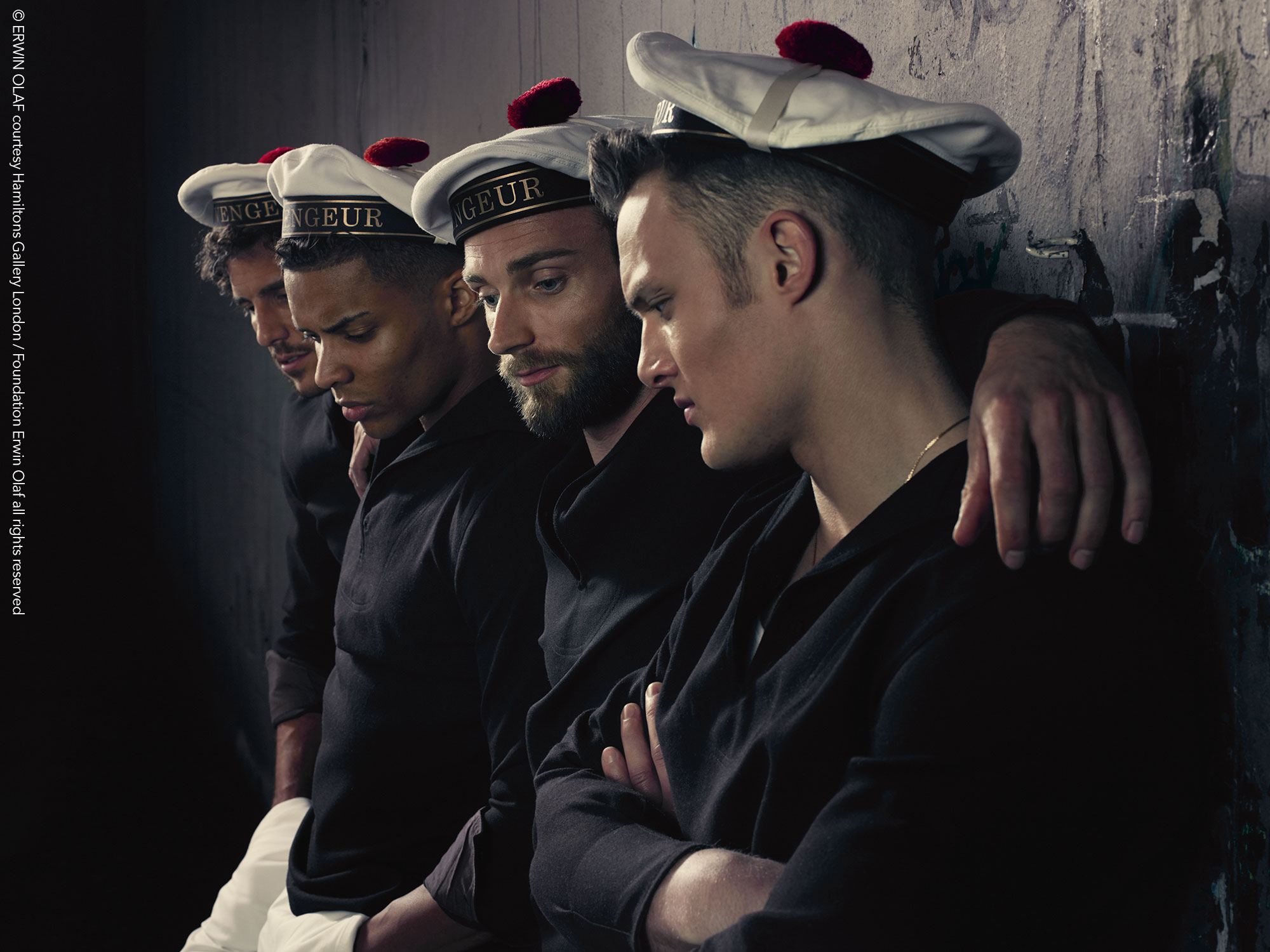
Over time, its name became part of Parisian nightlife mythology. Dalí, Gainsbourg, and a long list of musicians and artists passed through its doors, reinforcing the idea of a place where social boundaries softened in favour of music and encounter.
Following its closure in 2022, the building now enters a new phase. On 10 April 2026, Bus Palladium reopens as a five-star hotel under the same name, developed by Chapitre Six in collaboration with Studio KO. Rather than breaking with its past, the project approaches the building as something to be re-read rather than replaced.
Spread across six levels, the new configuration brings together hotel, restaurant, bar, rooftop and a subterranean club where music remains central to the identity of the place. Functions are not strictly separated; instead, the building is designed to operate as a continuous system where hospitality and nightlife intersect naturally.
Accommodation is made up of 35 rooms and suites, each designed individually. Studio KO’s approach combines a restrained material palette with references to the original spirit of the Bus and the visual language of the 1960s and 70s. Exposed concrete, industrial textures and warmer tactile elements sit side by side, forming a vocabulary that avoids nostalgia in favour of reinterpretation.
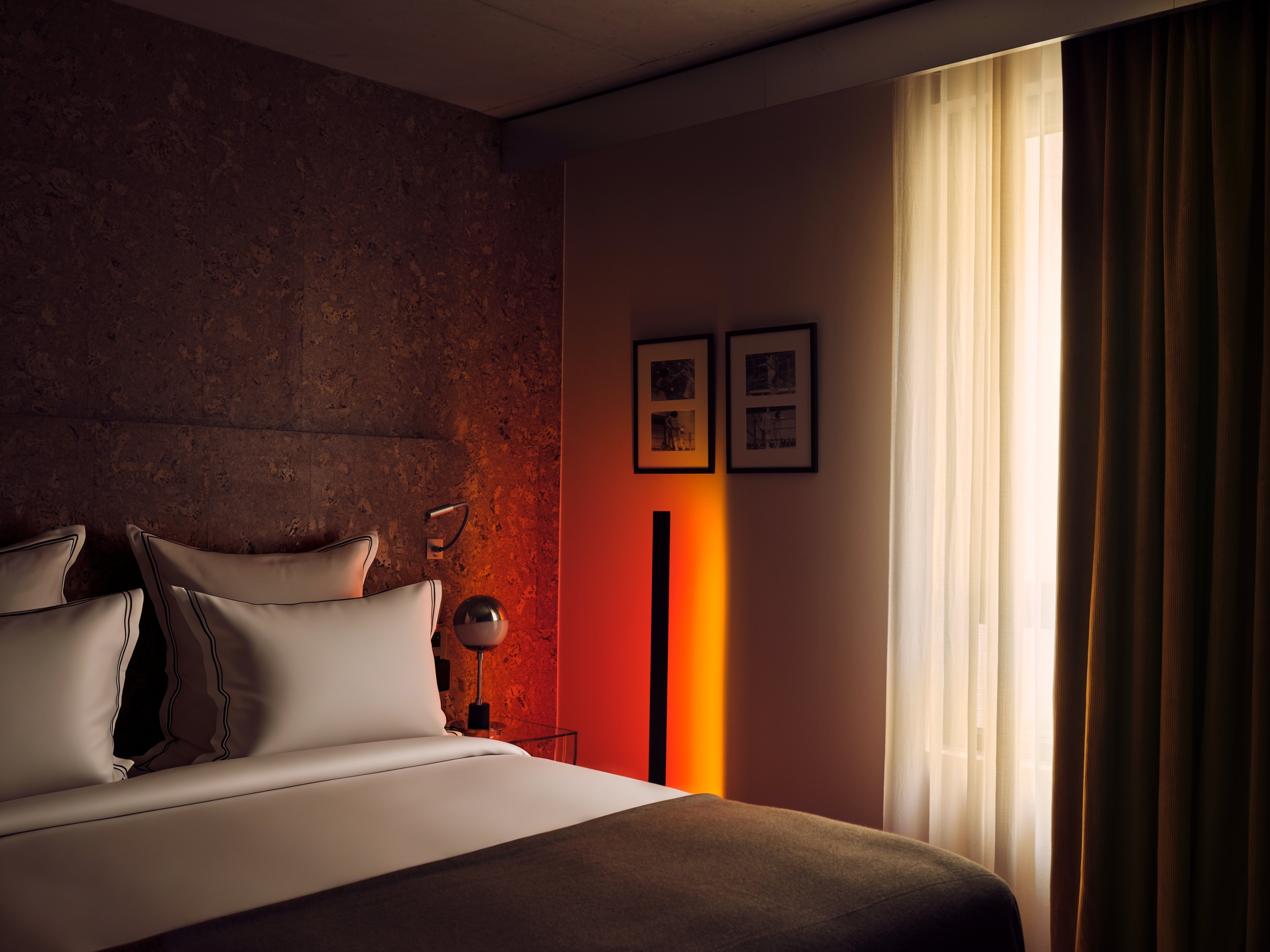
Rather than following a uniform model, the rooms are conceived as variations within a shared framework. Some introduce subtle graphic or musical references, though the overall effect remains deliberately non-standardised.
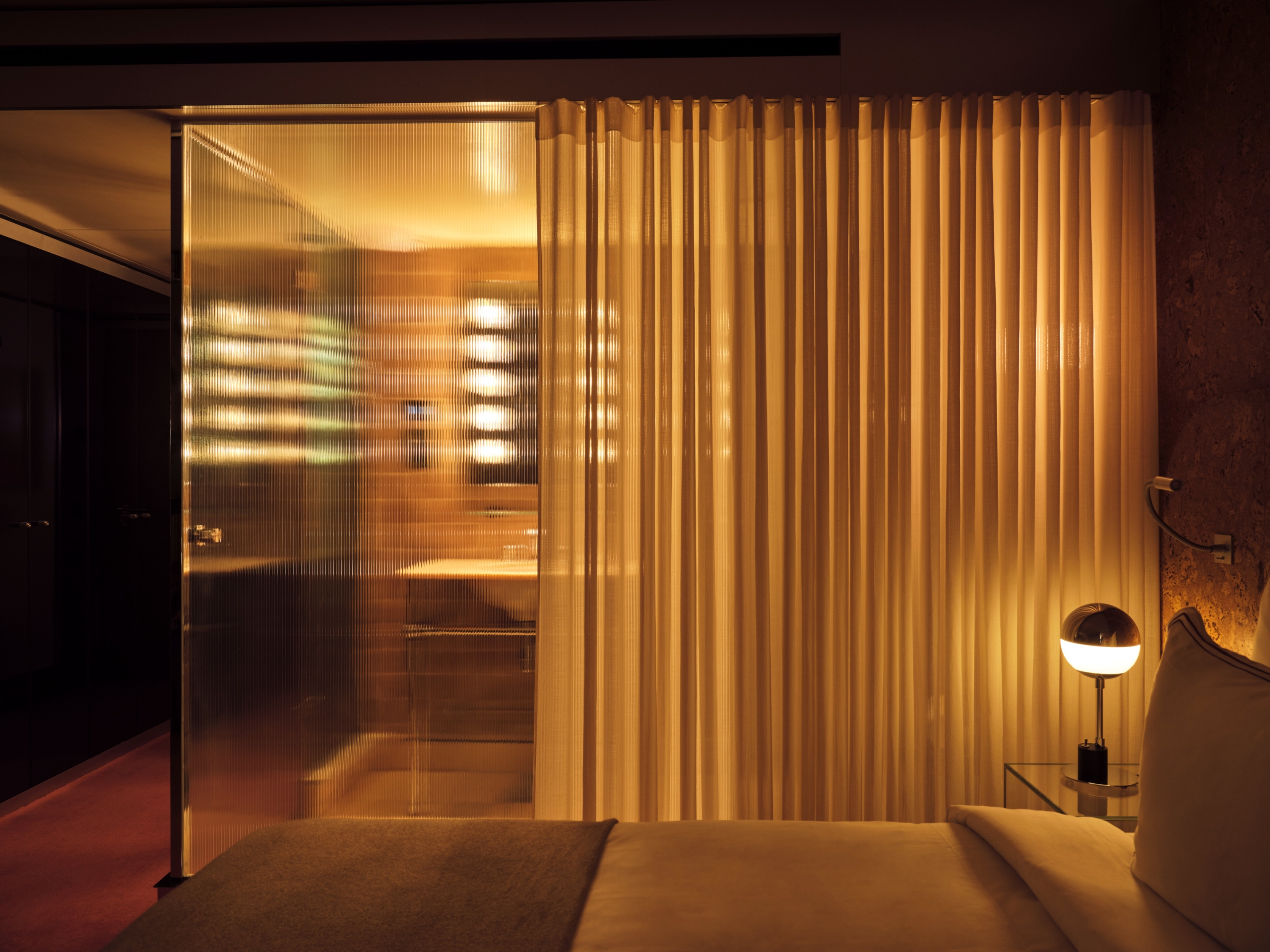
At ground level, the restaurant and bar extend the building’s rhythm into the daytime. Above, the rooftop offers a more open reading of both the property and its surroundings. Below, the club reinstates the function that originally defined Bus Palladium: music as the core operating force of the space.
More than an exercise in nostalgia, the project functions as a contemporary update of its own identity. The building is not treated as a fixed object, but as a layered environment where different uses coexist. Sleeping, dining, listening to music, moving between floors or descending into the club all form part of a single continuous experience.
In a city like Paris, where many places rely heavily on their past, this new chapter for Bus Palladium suggests another possibility: not to memorialise what once was, but to allow the place to function again.
Words: Gabriel Córdoba Acosta · Photography: Matthieu Salvaing
Bus Palladium Hotel, 6 rue Pierre Fontaine, 75009 Paris. For reservations and further information, visit the official website.