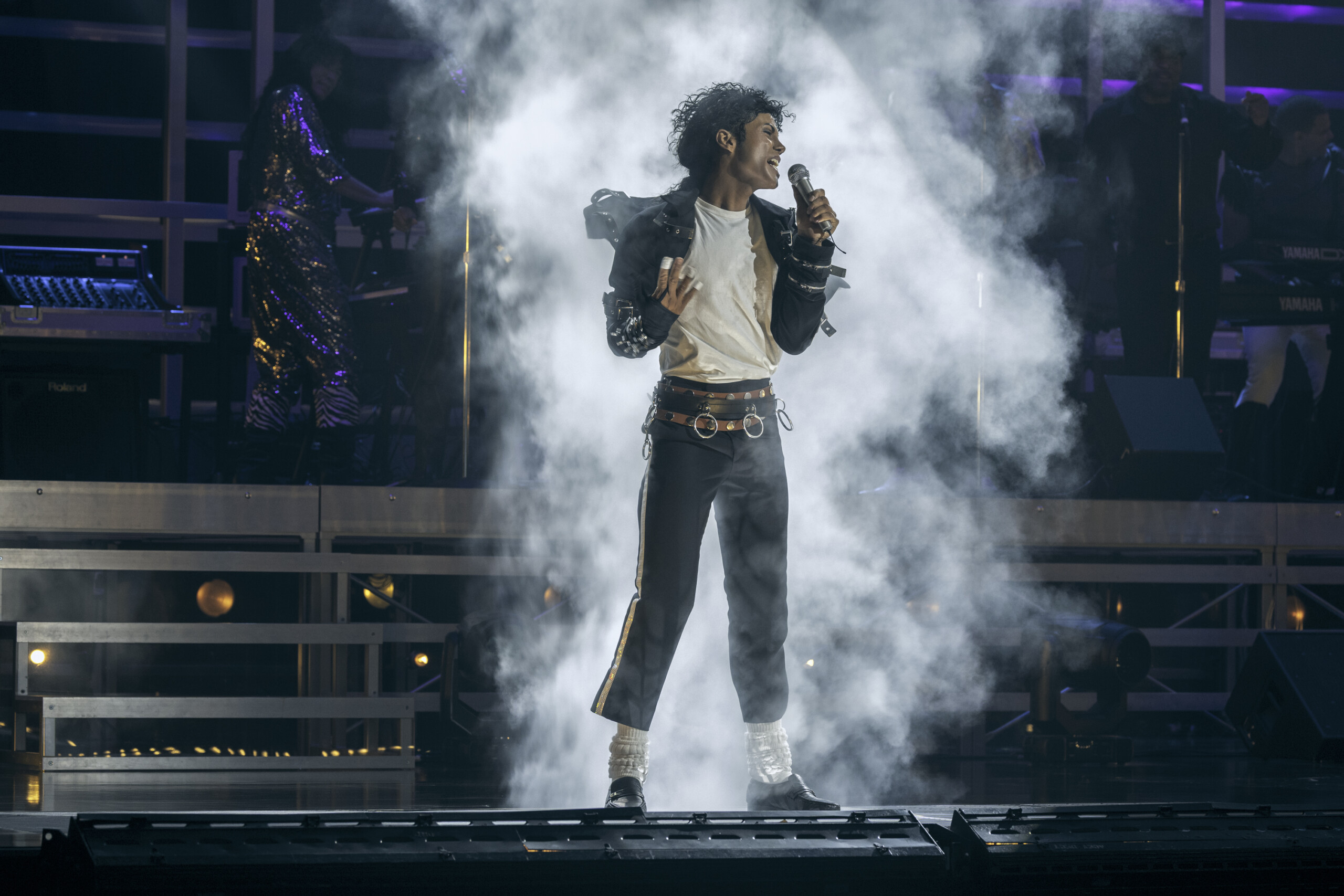

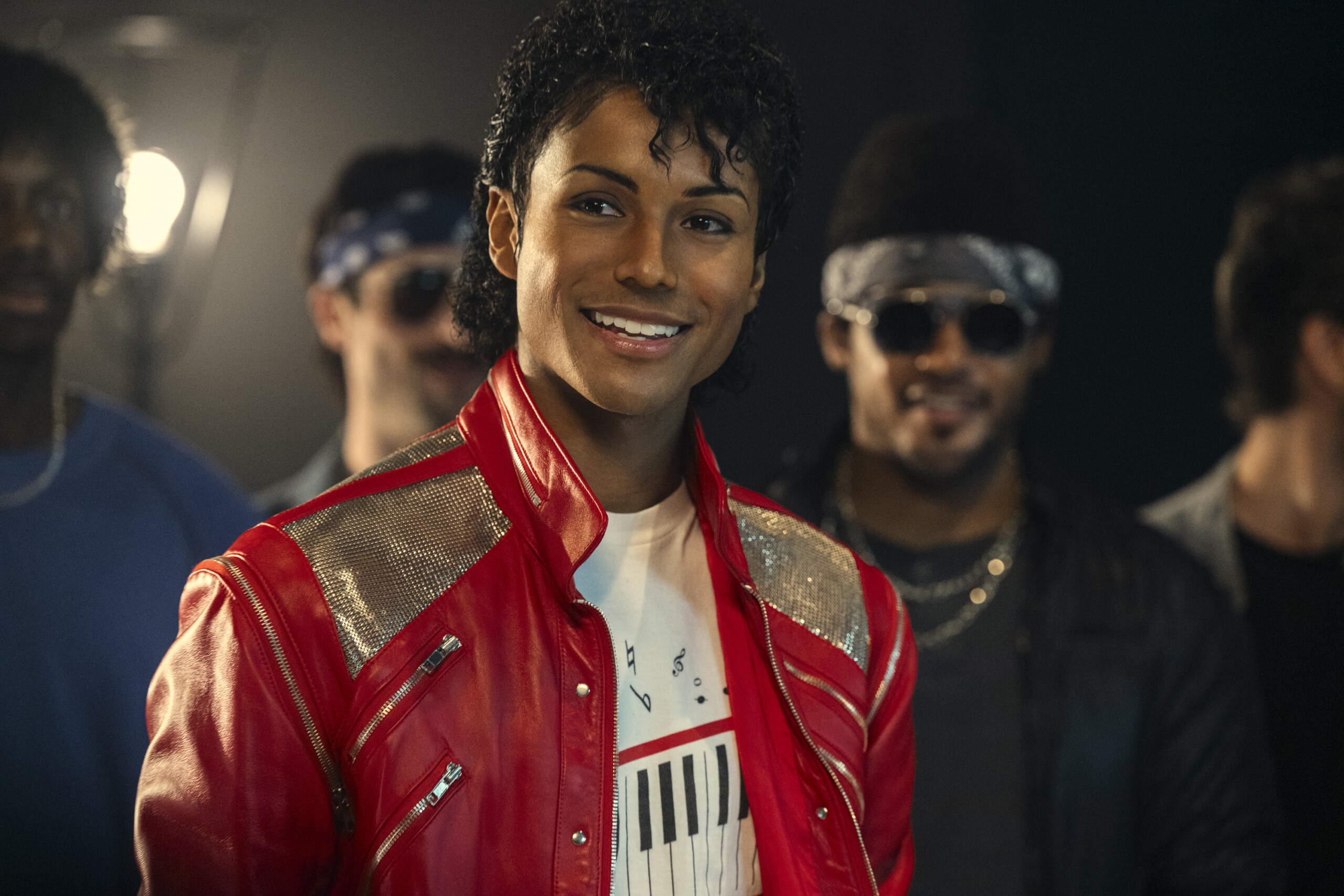
Jaafar Jackson as Michael Jackson in Maven. Photo Credit: Glen Wilson
In the current cycle of prestige biopics where familiar names are polished into awards-season narratives Michael arrives with a different kind of weight.
This isn’t just the story of Michael Jackson. It’s the story of what happens when a global icon, already mythologised beyond repair, is brought back into focus by a system that thrives on clarity.
And clarity, in Jackson’s case, has never been simple.
Produced by Graham King the architect behind Bohemian Rhapsody the film sits at the intersection of commercial ambition and cultural responsibility. That previous success alone sets expectations: scale, spectacle, and a carefully managed narrative. But Michael appears to be aiming for something more layered less about imitation, more about interpretation.
At the centre of it all is Jaafar Jackson, stepping into the role of his uncle in what marks his feature film debut. It’s a casting decision that feels both intimate and strategic. Familiarity becomes authenticity; proximity becomes performance. Whether that closeness enhances the portrayal or complicates it is one of the film’s most intriguing tensions.
Around him, a cast built for balance rather than distraction. Nia Long and Laura Harrier bring emotional grounding, while Miles Teller and Colman Domingo introduce a sharper dramatic edge particularly Domingo, whose recent work suggests a presence that doesn’t fade into the background.
Behind the camera, Antoine Fuqua directs with a sensibility that rarely leans into nostalgia. His films tend to move with urgency, driven by character and tension rather than sentimentality. Paired with a screenplay by John Logan whose work spans Gladiator to The Aviator the expectation is a narrative that explores ambition not as glamour, but as pressure.
Because that’s where Michael is likely to differentiate itself.
Rather than presenting a straightforward rise-to-fame structure, the film reportedly focuses on the duality of Jackson’s existence: the public spectacle versus the private cost. The performances, the reinventions, the relentless pursuit of scale set against a backdrop of isolation, control, and the weight of expectation.
It’s a framing that feels more aligned with contemporary storytelling. Today’s audiences are less interested in perfection, more interested in fracture.
And yet, the challenge remains obvious.
How do you tell the story of one of the most influential and controversial artists in modern history without reducing it to either celebration or critique?
The answer, if Michael succeeds, lies in tone. Not defensive, not indulgent but observational. A film that allows the contradictions to exist without rushing to resolve them.
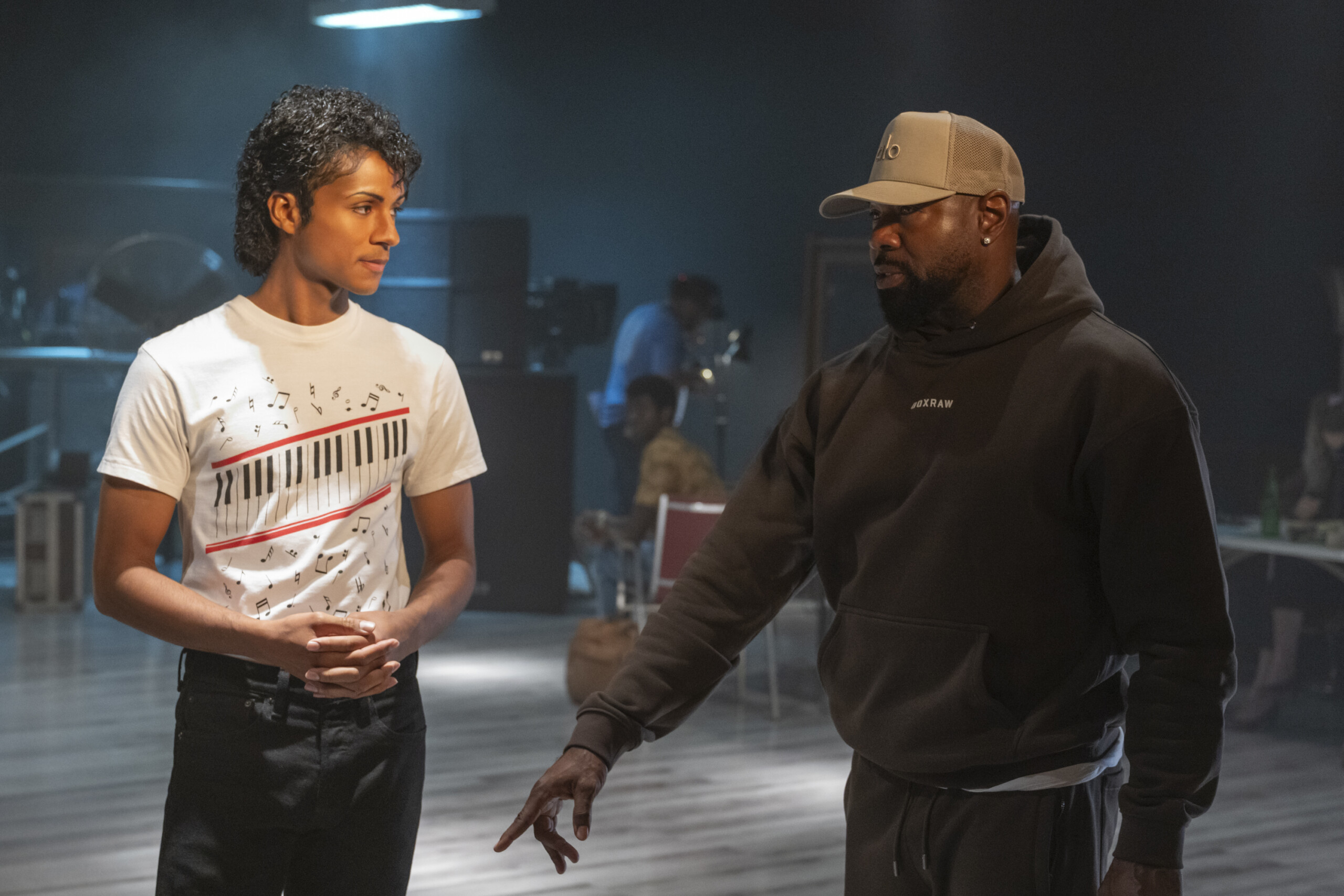
Jaafar Jackson as Michael Jackson and Director Antoine Fuqua in Michael. Photo Credit: Glen Wilson/Lionsgate
For LEWIS, this is where the project becomes culturally relevant.
Because beyond the box office, Michael represents a shift in how legacy is managed in cinema. It reflects a growing appetite for stories that acknowledge complexity rather than erase it particularly when dealing with figures whose impact shaped entire generations.
There’s also a broader industry play at work. With Universal Pictures handling international distribution and Lionsgate covering North America, the film is positioned not just as a release, but as a global event one designed to move across markets, audiences, and conversations with precision.
And perhaps that’s the most telling detail.
Michael isn’t trying to remind us who Michael Jackson was.
It’s asking whether we’re ready to see him differently.